

Speed Mingle News
The Psychology of Wokefishing: Spotting Ideological Deception in Modern Romance
Published on Monday, August 31, 2026
In the contemporary landscape of digital romance, profile curation has evolved far beyond showcasing physical appearance, height, and jet-setting lifestyles. Today, the most valuable currency on dating platforms is moral alignment. As socio-political polarization reaches historic highs, singles increasingly screen potential partners for shared values on social justice, environmental sustainability, and gender equality.
However, this cultural shift has given rise to an insidious form of relational manipulation: wokefishing.
Coined by journalist Serena Smith, wokefishing describes a phenomenon where a person presents themselves as progressive, socially conscious, and politically aligned with a potential partner during early dating stages, only for their true—often indifferent or diametrically opposed—views to emerge once emotional attachment is established.
Unlike traditional catfishing, which involves fabricating an identity using stolen imagery, wokefishing is an act of ideological camouflage. First gaining widespread recognition following the integration of identity-focused filters on modern dating applications, this practice expands the boundaries of digital deceit. To understand why this tactic has proliferated across dating apps, behavioral scientists point to a complex interplay of evolutionary strategy, cognitive dissonance, and the incentive structures of modern technology.
The Evolutionary and Psychological Drivers
At its core, wokefishing operates on the principle of strategic self-presentation. Relationship psychologists note that human mating behaviors have always involved a degree of signaling meant to exaggerate desirable traits. In political and socio-cultural spheres, however, the stakes feel uniquely intimate.
- Strategic Compatibility Signaling: Digital platforms encourage users to condense complex belief systems into profile badges (e.g., “Feminist,” “Environmentalist,” or specific social movement tags). Daters looking to maximize match rates adopt these labels as high-value currency, exploiting the halo effect—where holding a “good” belief implies overall moral excellence.
- Ideological Mirroring: In early conversation, wokefishers often agree unconditionally with a match’s stated stances rather than sharing authentic, nuanced perspectives. This instant validation triggers a release of dopamine and creates a false sense of psychological safety.
- The “Harem” Strategy: Evolutionary psychologists highlight that when value-selective daters prioritize prosocial traits like empathy and social awareness, competing suitors strategically adopt those exact signals to lower their target’s defensive barriers.
Values act as a shorthand for safety, empathy, and emotional intelligence. When someone claims to hold progressive views, they are not merely communicating a political vote; they are signaling that they are non-judgmental, empathetic listeners who respect personal boundaries. A wokefisher weaponizes that signal to gain rapid emotional proximity and bypass natural defenses.
Psychologists categorize wokefishers into three primary archetypes based on underlying motivation:
- Instrumental Deceivers (Calculated Manipulation): These individuals knowingly adopt progressive terminology (”intersectional,” “emotional labor,” “systemic change”) purely as a transactional strategy to increase match rates or secure physical intimacy. They view socio-political buzzwords as keys to unlocking trust, displaying high levels of Machiavellian traits and low empathy for the emotional fallout experienced by their partners.
- Audience Tuners (External Validation Seekers): Driven by a profound need for approval, these individuals subconsciously shift their stated values to match whatever an attractive listener wants to hear. They possess low internal stability and temporarily convince themselves of their own sincerity during the interaction.
- Aspirational Pretenders (Self-Deceptive Performers): Far more common are individuals who engage in self-deception. These dates want to view themselves as progressive, enlightened, and modern. They adopt the language of social movements passively through media absorption, but their core personal habits, private attitudes, and political behaviors have never been integrated into a consistent belief system. When challenged in real-world scenarios, their performative exterior crumbles under cognitive strain.
Anatomy of the Deception: How Wokefishing Unfolds
Relationships impacted by wokefishing generally follow a distinct, predictable three-phase narrative:
- Phase 1: The Mirroring Stage (Over-Alignment on Values): During initial interactions, the wokefisher aggressively validates the target’s worldview. They enthusiastically agree on complex social issues, share trending activist content, or list progressive badges in their dating bio. The target experiences rapid trust built on perceived shared ethics.
- Phase 2: The Cracks in the Facade (Performative Gaps Emerge): Over several weeks or months, subtle contradictions arise. The individual’s daily actions, jokes, interpersonal habits, or private commentary fail to mirror their public statements.
- Phase 3: The Mask Slip (Indifference or Hostility): A catalyst—such as an unexpected debate, a stressful situation, or an extended period of intimacy—forces a reveal. The wokefisher reveals genuine apathy, reactionary viewpoints, or dismissiveness toward the very causes they claimed to champion.
Psychological Impact and Emotional Cost
Discovering that a partner’s moral compass was fabricated induces a specific form of cognitive shock. Beyond simple heartbreak, victims of wokefishing report experiencing profound self-doubt, hypervigilance, and “reality testing” anxiety, where they begin to second-guess their judgment across all social interactions.
Because values are tied directly to personal identity, having those principles exploited feels like a profound breach of personal safety. For individuals belonging to marginalized communities, being wokefished can feel like an acute ethical betrayal, leaving victims to question whether their partner ever cared for them or simply loved a sculpted avatar designed to trap them.
While other forms of deceptive impression management, like love bombing, rely on emotional intensity (overwhelming praise) to construct a dopamine trap, wokefishing relies on ideological conformity (echoing stances) to construct a value hack. The psychological toll of love bombing leads to trauma bonding, whereas the psychological toll of wokefishing results in identity betrayal and deep moral disillusionment.
Spotting the Red Flags: Countermeasures for Digital Daters
Detecting performative values early requires looking past profile badges and observing real-world behavioral patterns across specific dimensions:
- Depth of Knowledge: Performative individuals rely entirely on trendy buzzwords, slogans, or superficial consensus. Authentic individuals share personal reflections, lived experience, or nuanced discussion. Daters should ask open-ended questions about personal experiences rather than theoretical concepts (e.g., “How did you first get involved in that cause?”).
- Behavioral Consistency: Performative individuals pair high-minded public stances with dismissive or self-centered interpersonal behavior. Authentic individuals demonstrate actions in daily life that match their stated ethics, such as how they treat service staff or navigate interpersonal conflict. Observe everyday behavior, as authentic empathy is consistent regardless of who is watching.
- Handling Disagreement: Performative individuals echo every opinion completely to avoid friction or become defensive when probed. Authentic individuals offer genuine perspectives respectfully while navigating complex topics. Express a nuanced or slightly divergent take on a non-critical issue to test if they can engage respectfully with difference.
- Absence of Action: Performative individuals claim deep commitment to social or environmental causes, but show zero history of direct support or community engagement. Authentic individuals possess a tangible behavioral history. True conviction drives real-world action, not just social media shares.
Media Spotlight: “21st Century Dating Decoded!” Tackles the Epidemic
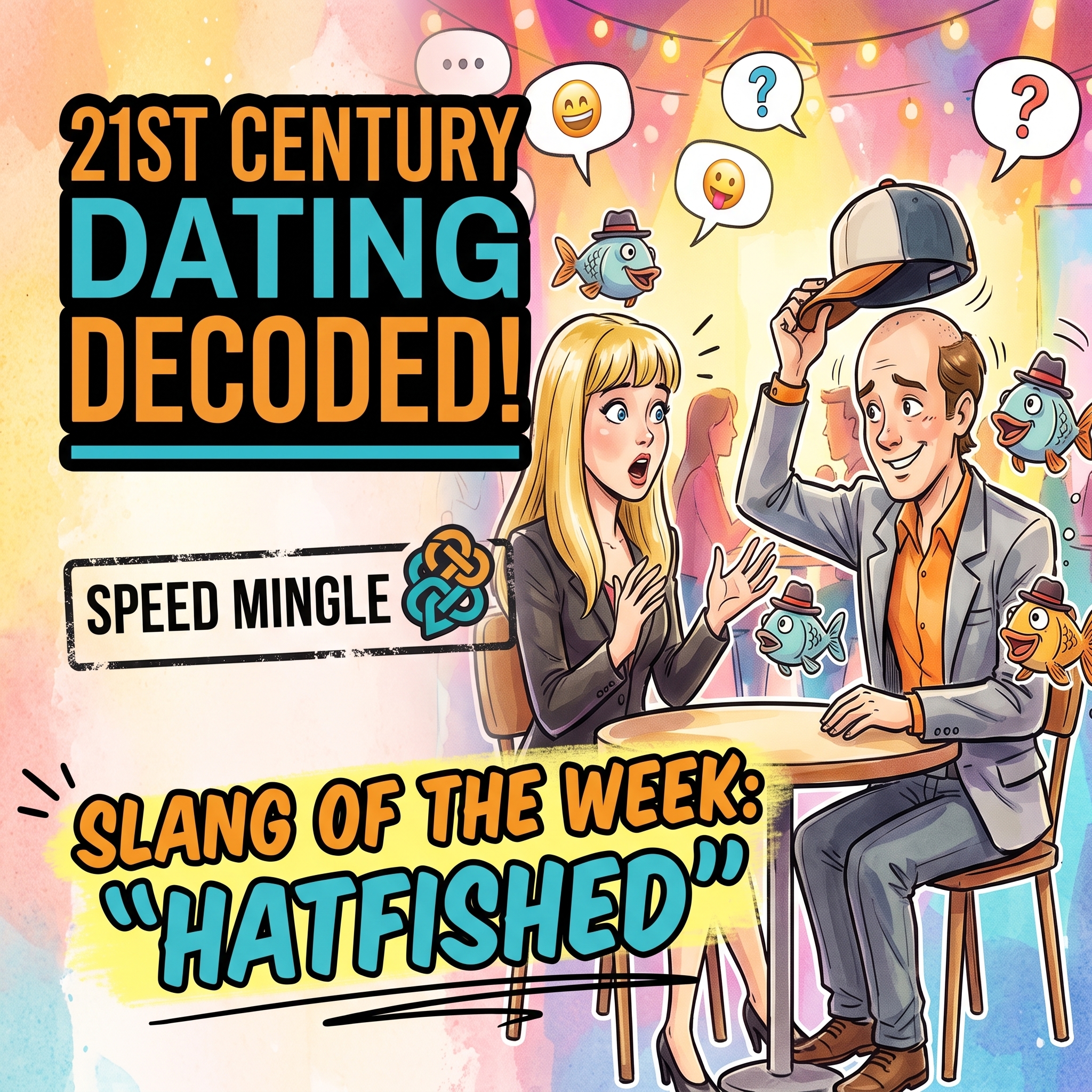
The phenomenon took center stage in a recent episode of the popular podcast 21st Century Dating Decoded!, hosted by behavioral commentators Zack and Alice. The hosts deconstructed the structural decay of modern dating, characterizing wokefishing as the “toxic intersection of catfishing and wokeness.”
“Dating in 2026 has become a fever dream where we’ve completely traded relational structure for unfiltered desires,” noted co-host Alice during the broadcast. “We have all these high-tech apps, yet we’ve never been less certain if we’re talking to a partner or a persona curated by a marketing intern. The mask of the wokefisher is the ultimate symbol of our broken state—it’s performative presence over actual substance.”
Co-host Zack emphasized the clinical reality of Deceptive Impression Management, noting that perpetrators weaponize cheap signaling to bypass safety filters. “In an endless asynchronous text thread, there is zero behavioral accountability. You have hours to Google the ‘right’ progressive response. They use your in-group bias against you to create a value hack. But when forced into real-time interaction, cheap signaling falls apart.”
To combat this trend, the podcast highlighted offline and real-time interaction models—such as structured speed-mingling platforms—that strip away asynchronous communication. By engaging in face-to-face video, social gatherings, and activity-based events, daters introduce necessary behavioral friction, making performative personas virtually impossible to sustain.
The Path Forward for Digital Dating
As dating culture continues to integrate ideological screening into the matching process, relationship experts advise daters to prioritize behavioral consistency over verbal alignment.
To avoid giving bad-actor daters a cheat sheet, singles should delay upfront value-disclosure in their profiles rather than listing every dealbreaker publicly. Furthermore, daters should ask for nuance over rehearsed slogans, observe micro-behaviors in low-stakes settings, and test for complexity by introducing topics with genuine ambiguity.
While political and moral compatibility remains a vital pillar of lasting relationships, true intimacy cannot be built on a curated list of keywords. Spotting wokefishing requires looking beyond profile text, slowing down emotional velocity, and allowing a partner’s true character to demonstrate itself over time through sustained action, empathy, and integrity.
Where to Listen & Watch:
- Audio: Apple Podcasts, Spotify, YouTube Music, Amazon Music, Audible, iHeartRadio, Deezer
- Video: YouTube, Roku, Amazon Fire TV (Search: “Speed Mingle Network”), or @ SpeedMingle.mobi
- Official Hub: 21stcenturydatingdecoded.com | TheSpeedMingle.com
- Socials: @TheSpeedMingle
Smash that subscribe button, leave us a 5-star review, and share this episode with that friend who still uses an expired filter on a dark headshot!
Until our subsequent episode, remain deliberate, maintain protection, and consistently date with a defined purpose.
#Wokefishing #21stCenturyDatingDecoded #ModernDating #DatingAdvice #RelationshipPsychology #SpeedMingle #RedFlags #DigitalDating #IntentionalDating