

Speed Mingle News
The Great Swipe Burnout and the Dating Recession
Published on Saturday, August 29, 2026
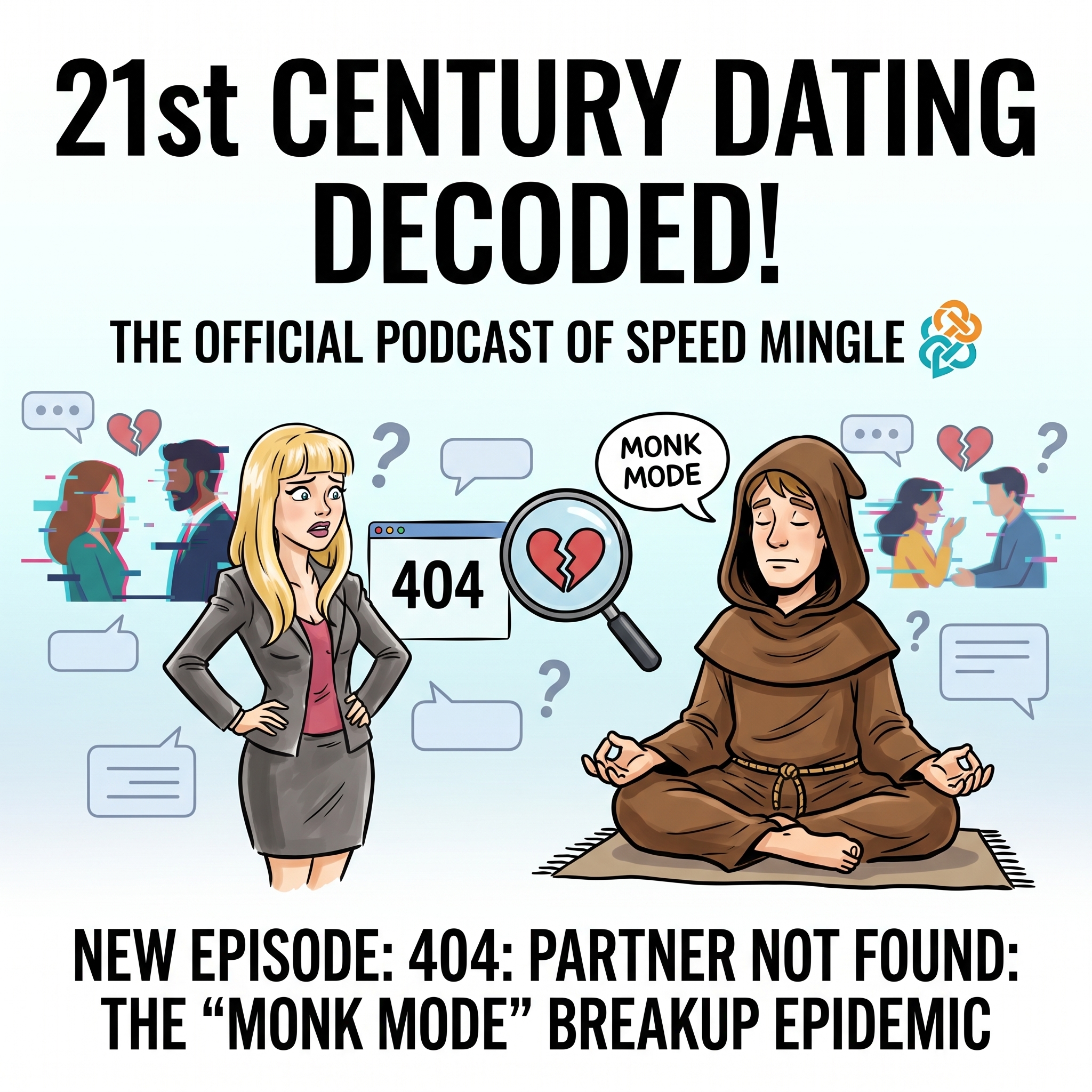
The digital pipeline to romance, which served as the primary engine for human intimacy for over a decade, has officially ground to a halt across major metropolitan hubs. Demographic researchers, behavioral sociologists, and tech analysts are documenting a systemic shift known as the “dating recession”—a phenomenon where Gen Z and Millennial singles are fundamentally reallocating their social and financial capital away from the algorithmic marketplace. This is not a temporary lull in user engagement, but a structural crisis for an industry that hit a $3.2 billion valuation in the United States by 2025. As the flow of digital connections is choked off, the drivers are twofold: a profound mental exhaustion termed “swipe fatigue” and a mounting financial “dating tax” that has rendered the traditional first-date cocktail a luxury few are willing to subsidize.
The strategic crisis facing these platforms is rooted in a psychological “casino effect.” When location-based dating apps exploded in popularity in the mid-2010s, their algorithmic design relied heavily on variable reward schedules—the same psychological feedback loop that makes slot machines addictive. Over time, the gamification of intimacy, once hailed as a technological miracle for human connection, has transformed into a repetitive trap that prioritizes screen time over real-world outcomes. Dr. Elena Rostova, a behavioral sociologist studying digital relationships, notes that users are experiencing severe cognitive overload. Presenting the human mind with hundreds of potential partners an hour flattens human connection into a transactional performance, creating decision paralysis rather than genuine intimacy.
This environment has cultivated a pervasive toxic culture driven by choice paralysis. Marsha Goei, co-founder of the Dutch app Breeze, argues that the sheer abundance of options makes it too easy for users to constantly search for the next match, rendering human interaction disposable. According to recent surveys across North America and Europe, 79% of Gen Z adults report experiencing burnout from online dating apps, while 64% of active users express dissatisfaction with the quality of interactions, citing ghosting, superficial banter, and deceptive profiles as top grievances. Over half of surveyed singles under 30 state they have taken an extended sabbatical—lasting three months or longer—from all dating platforms over the past year.
This friction is further exacerbated by the “optimized beige” problem of early 2026. With 54% of users employing generative AI tools to polish their personas, digital interactions have become indistinguishable, sanitized, and unmemorable. When every opening line is a chatbot’s suggestion and every profile photo is an AI-filtered ideal, the resulting decision paralysis makes the act of dating feel like a commodified chore rather than an organic human endeavor.
This mental strain is now colliding with a tangible economic contraction in the hospitality sector. The dating recession represents a structural crisis for the nighttime economy, which historically relied on single patrons to drive high-margin alcohol sales. Late-night venues in major cities have seen a 4% year-over-year contraction as singles reject the high cost of the transactional first-date drink. Inflation and the rising cost of living have transformed the casual first outing from a low-stakes evening into a significant budget item. A standard metropolitan outing of two craft cocktails and an appetizer now carries a price tag between $70 and $100, with total night-out costs frequently escalating between $85 and $120 or more when accounting for ride-shares and entertainment.
This financial friction has forced a massive temporal and operational shift across the service industry. Revenue from the 5 PM to 7 PM “Happy Hour” slot has officially outpaced the historically dominant 7 PM to 10 PM window. To survive, bars and venues are pivoting toward activity-driven hospitality—such as pickleball, trivia, bouldering, and board games—to lower the social stakes, reduce per-person costs, and make the financial investment feel predictable. The economic desperation is mirrored in the tech sector itself, where Bumble has seen its net margin collapse to a staggering -82.41%, signaling a business model that is burning cash to acquire users it can no longer profitably retain.
Faced with double-digit revenue drops and slowing premium subscription growth, tech incumbents like Match Group (parent company of Tinder and Hinge) and Bumble Inc. are frantically re-engineering their core products to move away from the infinite swipe. In early 2026, Bumble launched its “Bee” assistant, which replaces the standard profile setup with a values-based onboarding conversation designed to act as a digital therapy intake. Similarly, Hinge’s AI Core Discovery Algorithm is reporting a 15% boost in matches by delivering highly vetted, single weekly matches intended to move users off the app quickly. By constraining supply, platforms hope to increase the perceived value of each match, forcing users to invest time in meaningful conversation rather than endless browsing.
However, these technological pivots are complicated by the blatant hypocrisy surrounding AI dating. While 80% of users report feeling comfortable using AI tools to enhance their own profiles, the vast majority state they would reject a match who did the same. This highlights a desperate arms race for efficiency where users seek an unfair advantage through technology while simultaneously demanding authentic, unfiltered connections from others—a contradiction that accelerates the “enshittification” of mass-market dating apps.
The human cost of this digital market failure is punctuated by a growing “analog” renaissance. Maya Lin, a 26-year-old graphic designer, represents a generation opting out of the swipe carousel. After deleting her apps, she described the experience as a “second job that paid out zero dividends,” a sentiment backed by the brutal 1.69% male match rate currently documented on legacy platforms like Tinder. This sabbatical mindset is fueling a surge in run clubs, organized group meetups, and single-specific events where the return on emotional investment, or “ROEmancing,” is viewed as higher, safer, and less high-pressure.
Niche operational models are stepping in to capitalize on this desire for verified physical proximity. Systems like the pay-per-date Amata model, or the Dutch app Breeze—which prohibits in-app messaging until four hours before a scheduled date to force an immediate face-to-face meeting—are reshaping the market. Other platforms, such as Iris, utilize biometric tracking like pupil dilation and facial attraction patterns to bypass the deceptive nature of text-based profiles entirely. This return to physicality represents a biological “lizard brain” response to the failure of the “silicon brain.”
Ultimately, the current dating recession is not a signal that young adults have abandoned the search for romance, partnership, or community. Rather, it represents a fundamental rejection of how technology has mediated intimacy over the past decade. The era of mindless swiping has hit its ceiling as technology has functioned more as an addictive master than a helpful concierge. As the “dating tax” and swipe fatigue reshape the social and economic landscape, the long-term viability of digital romance depends on its ability to fulfill the ultimate promise of the digital age: serving as an efficient facilitator for a world where people finally resume talking face-to-face.
🎧 Where to Listen & Watch
- Audio: Apple Podcasts | Spotify | YouTube Music | Amazon Music | Audible | iHeart Radio | Deezer
- Video (Speed Mingle TV): YouTube | Roku | Amazon Fire TV (Search: “Speed Mingle Network”) | Mobile Web App: SpeedMingle.mobi
- Official Hub: 21stcenturydatingdecoded.com
🌟 Show Your Support
Smash that Subscribe button, drop us a 5-star review, and share this episode link with that friend who still uses an expired filter on a dark headshot! 😉
Until our subsequent episode: remain deliberate, maintain protection, and consistently date with a defined purpose.
#21stCenturyDatingDecoded #TheGreatSwipeBurnout #DatingRecession #SpeedMingle #DatingAppFatigue #RealLifeConnections #SingleLife #PodcastEpisode