

Speed Mingle News
How Social Media Sabotaged Modern Romance
Published on Sunday, October 11, 2026
Behind the polished couple portraits, algorithmic matchmakers, and curated feeds of the digital age lies a paradoxical crisis: the technology designed to bring people together has systematically dismantled our ability to build and sustain genuine romantic intimacy. What began as a promise of endless connection and frictionless dating has instead cultivated a fractured social landscape defined by choice overload, psychological fatigue, performative relationships, and the gamification of human attachment.
As dating applications and social networking platforms solidify their dominance over modern courtship, sociologists and behavioral experts warn that traditional relationship milestones are being replaced by transactional interactions. The sheer volume of prospective partners available at the swipe of a finger has triggered the psychological phenomenon known as the choice overload effect. When option sets feel infinite, committing to a single individual is increasingly perceived as an unnecessary risk or an undue compromise. This persistent anxiety—the fear that a superior match is always one direct message away—has fostered widespread commitment aversion and normalized the practice of discarding healthy relationships at the first sign of routine friction.
This culture of disposable intimacy is further exacerbated by the public nature of modern romance. Social media has effectively converted private emotional bonds into public relations campaigns, forcing couples to navigate the pressure of digital audience evaluation. Partners routinely measure the health of their everyday reality against hyper-curated, conflict-free relationships displayed by influencers and peers. Mental health clinicians report a sharp rise in relational anxiety stemming from micro-cheating and digital surveillance, where liking specific photos, monitoring activity status, and tracking a partner’s online footprint create novel categories of mistrust and paranoia before a foundation of mutual confidence can even be established.
The Illusion of Infinite Choice and Algorithmic Isolation
The global shift toward digital-first communication and algorithmic matching engines has paradoxically dismantled the foundational mechanics of romantic connection. What began as a technological promise to expand social circles and streamline dating has instead cultivated an era defined by decision paralysis, acute relational anxiety, and widespread emotional burnout. Psychologists and sociologists point to the paradox of choice as a primary mechanism driving this shift. Dating platforms and social feeds present users with an apparently inexhaustible sequence of prospective partners, transforming human connection into an endless catalog browse.
According to behavioral research, as individuals browse through prolonged streams of profiles, their rate of accepting potential matches declines dramatically over the course of a single session. Rather than fostering openness, continuous exposure to options trains the human brain into a hyper-critical rejection mindset. This abundance mindset translates into an opportunity cost anxiety within existing partnerships. The psychological awareness that alternative choices remain a swipe or direct message away lowers overall commitment readiness. As a result, modern couples report shorter relationship lifespans and a heightened tendency to abandon connections at the first sign of interpersonal conflict, treating partners as disposable commodities rather than long-term collaborators.
Beyond the initial search, daily relationship dynamics face constant friction from smartphone distraction and platform-driven surveillance. National survey data reveals that over half of partnered adults report their significant other is routinely distracted by a mobile device during face-to-face conversations. Relationship researchers note that this behavior—commonly termed “phubbing”—directly correlates with lower romantic satisfaction and reduced emotional responsiveness between partners. When Maya Lin and her partner sat down for their third anniversary dinner at a candlelit bistro in Brooklyn, the ambiance was curated for intimacy. Yet, within twenty minutes, both phones were face-up on the table, pulsing with notifications. Between photographing the appetizers for social media stories and checking read receipts, the conversation flickered out. Lin noted that while they were physically sitting two feet apart, mentally they were validation-hunting in two entirely separate universes.
Lin’s experience is far from an anomaly. What began as a tool to bridge geographic distances has increasingly become a quiet wedge inside modern relationships. Across relationship psychology, sociometrics, and digital culture, experts are observing a profound shift: social media hasn’t just changed how couples communicate, it has altered the psychological architecture of romantic commitment itself.
The Algorithmic Advice Machine and Manufactured Traps
For decades, interpersonal guidance was rooted in traditional, contextualized support systems: certified relationship counselors, trusted family elders, and long-standing personal networks. Today, those foundational pillars have been largely supplanted by digital feeds, most notably short-form video algorithms. This shift has institutionalized an algorithm-driven culture of hyper-vigilance, systemic distrust, and cognitive paranoia within modern dating. By swapping grounded, personal counsel for algorithmic distribution, single individuals are increasingly conditioned to view prospective partners not as multi-dimensional human beings navigating complex lives, but as latent hazards requiring constant surveillance, forensic decoding, and immediate disqualification.
The structural architecture of short-form social video platforms inherently favors sensationalism, binary rules, and outrage over grounded relationship dynamics. Content advocating for patient, direct communication or mutual compromise remains algorithmically buried because it lacks the dramatic tension necessary to maximize watch time, shares, and comments. Conversely, videos that urge viewers to end relationships immediately, promise to reveal hidden red flags, or construct high-drama narrative arcs achieve viral reach by exploiting protective anxiety. This economic incentive structure monetizes emotional insecurity, creating a systemic bias on social platforms against relationship retention and mutual understanding.
This profit-driven framework amplifies viral adages that compress intricate human dynamics into rigid absolutes. Viral dating experts routinely circulate content that presents an overwhelmingly bleak outlook on modern love, with viral commentary explicitly claiming that merely questioning a partner’s fidelity—regardless of whether they actually cheated—is automatic grounds for a breakup, or asserting that a partner trying their best should be discarded because their best is insufficient. By reducing complex interpersonal situations to one-size-fits-all mandates, these viral clips demand emotional mind-reading while normalizing worst-case assumptions about human intent.
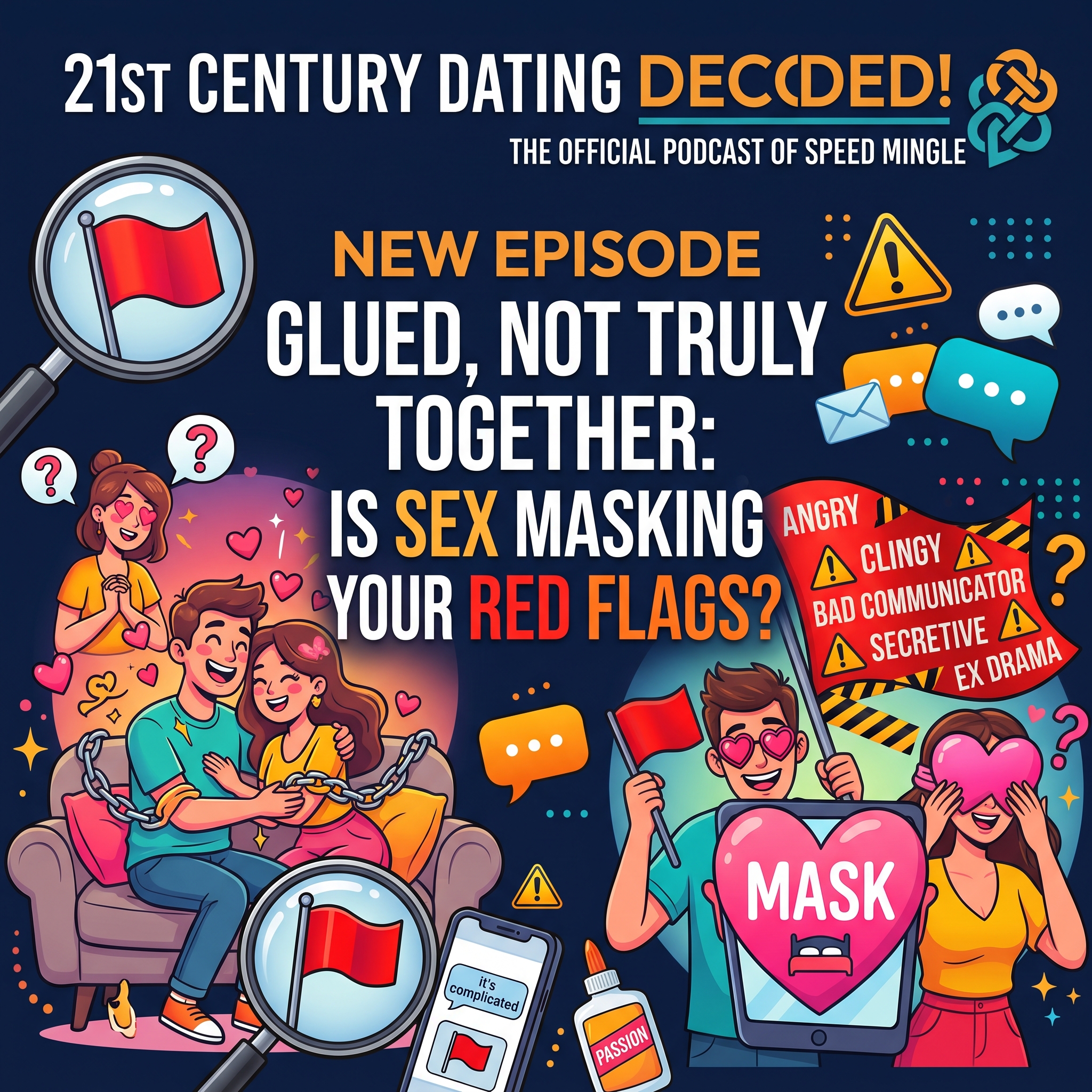
Early-stage dating has consequently undergone a structural transition: explicit, mutual expectation-setting has been eclipsed by covert evaluation. Instead of communicating personal preferences directly, daters increasingly subject their partners to unannounced digital pass/fail exams promoted by viral trends. Among the most widespread manifestations of this trend are viral benchmarks like the “Orange Peel Theory”—which posits that a partner’s failure to spontaneously perform a small act of service signals a fundamental lack of love—and social media challenges where daters pose hypothetical financial demands or audit early spending habits to test a partner’s financial capacity and transactional generosity.
Relationship psychologists warn that using uncommunicated internet traps as a proxy for genuine affection inevitably sets partners up for failure. When someone fails a test they did not know they were taking, the creator feels validated in ending the relationship, while the partner is left bewildered. This widespread adoption of gamesmanship aligns directly with the established academic taxonomy of secret tests in interpersonal communication literature. Daters utilize indirect mechanisms to reduce uncertainty without exposing themselves to direct vulnerability:
Third-Party Tests: Inquiring through a partner’s friends, family, or social media networks to covertly gauge their true feelings or relationship status.
Triangle Tests: Intentionally involving a third party or flirting with others in front of a partner to provoke jealousy and measure emotional investment.
Fidelity Tests: Creating artificial scenarios—such as staging fake social media interactions or leaving a partner alone with an attractive third party—to observe whether they remain faithful.
Directness Tests: Making targeted disclosures strictly to force reciprocation and evaluate commitment.
Separation Tests: Artificially increasing physical or geographic distance to test whether the emotional bond can survive without constant contact.
Endurance Tests: Introducing artificial emotional or physical costs into the relationship through deliberate negative behavior, excessive self-criticism, or logistically demanding requests to measure compliance.
Public Presentation Tests: Testing relationship status through unannounced public declarations or social media profile updates.
Indirect Suggestion Tests: Employing roundabout jokes or nonverbal touches to evaluate reactions without risking explicit rejection.
Algorithmic loops capitalize on these latent insecurities. By continually serving content that frames minor human lapses—such as taking an hour to reply during a busy workday or stating a need for rest—as conclusive evidence of emotional detachment, platforms prompt daters to draw catastrophic conclusions. The broader social consequence of substituting transparent dialogue with covert scorekeeping is a perpetual cycle of artificial conflict, hyper-vigilance, and premature exits.
Weaponized Therapy Speak and Default Self-Sabotage
The democratization of psychological jargon on short-form video platforms has introduced severe strategic risks to modern dating. Lacking formal clinical training or contextual understanding, casual users routinely flatten complex human friction and basic miscommunications into sinister psychological disorders. Everyday disagreements and routine human blunders are systematically pathologized online through three primary misapplications:
Gaslighting: Applied indiscriminately to standard differences in memory, perception, or subjective interpretation of a past event, transforming routine misunderstandings into calculated psychological manipulation.
Love Bombing: Applied to normal, high-level enthusiasm, affection, and romantic excitement during early courtship, conditioning daters to view genuine warmth with immediate suspicion.
Narcissism: Applied to any partner who exhibits momentary self-interest, stress, emotional withdrawal, or an inability to meet an unstated expectation.
Mental health professionals and industry insiders emphasize that this clinical overreach distorts relationship dynamics and destroys empathy. Psychologists highlight a massive surge in clients asserting that their ex-partners suffer from clinical personality disorders. However, clinical diagnostic statistics confirm that Narcissistic Personality Disorder affects roughly one percent of the population, whereas occasional self-interest or temporary lapses in empathy are universal human traits. When couples actually address underlying communication gaps and misunderstandings, theories around clinical diagnoses usually evaporate.
Matchmakers and sociologists note that swiping culture and digital anonymity reduce human beings to disposable commodities, creating an environment of casual cruelty. Online advice frequently forgets fundamental human complexity, treating individuals as if they were mass-produced products rather than human beings with natural variations in personality, emotional capacity, and personal flaws. Misidentifying every flawed interaction as a clinical personality disorder blocks personal accountability and prevents genuine conflict resolution. Unvetted internet experts step into the void created by dating app burnout, deploying false authority to sell rigid rules that encourage singles to protect themselves so fiercely they push away authentic connection.
When daters lack self-awareness, an algorithmically delivered quote does not offer objective truth; instead, it targets and validates their specific psychological defense mechanism:
Fear of Intimacy / Hyper-Pickiness: When a dater’s default pattern is using high standards as a protective shield against vulnerability, viral mantras regarding never settling reinforce hyper-criticism. The dater actively searches for red flags before giving a partner a fair chance, interpreting a partner’s simple statement of exhaustion as a fatal commitment flaw rather than routine human fatigue.
Anxious Attachment: For daters who overthink and experience acute panic over delayed text responses, viral assertions that effort reflects interest trigger full-blown despair. Every pause or miscommunication is interpreted as catastrophic rejection, driving their nervous system into hyper-vigilance.
People-Pleasing: Daters who over-function, ignore their own limits, and bend over backward to maintain approval process advice about selflessness as permission to abandon themselves, doubling down on performative confidence while secretly suppressing their true needs.
Hyper-Independence: Individuals accustomed to total self-reliance who feel unsafe receiving care embrace messages of complete self-sufficiency to justify emotional detachment, telling themselves they are perfectly fine alone while masking an unmet longing for connection.
Without rigorous self-awareness, daters outsource their emotional intuition to viral feeds, feeding their oldest psychological wounds rather than healing them.
Diagnostic Frameworks and Strategic Decoupling
To navigate modern dating without falling into algorithm-induced panic or social media alarmism, daters require a systematic diagnostic framework. This objective process separates basic human friction and communication gaps from genuine safety hazards and intentional boundary violations.
When an unsettling interaction occurs, processing the incident through an objective three-filter check provides cognitive clarity before dramatic action is taken:
Filter 1: Explicitness: Was the expectation or boundary explicitly stated, or was it merely assumed and implicit? Communication misunderstandings occur when expectations were never verbalized. A genuine boundary violation occurs only after an explicit limit has been directly communicated.
Filter 2: Reaction to Feedback: How does the individual respond when the issue is brought to light? A healthy partner demonstrates curiosity, validates feelings, offers a genuine apology, and adjusts behavior. A boundary violator displays defensiveness, minimization, deflection, or empty verbal promises without behavioral follow-through.
Filter 3: Pattern vs. Outlier: Is the unsettling behavior an isolated mistake tied to extreme stress, distraction, or misunderstanding, or does it represent a repeating pattern across multiple contexts?
Relationship strategists stress that boundaries should function as a selection mechanism rather than a negotiation tactic or performative speech. Boundaries exist to reveal who possesses the capacity to meet a standard without defense or bargaining. When establishing limits, daters should employ direct, behavior-based language that avoids accusatory statements, defensive over-explanation, or permission-seeking.
To state a structured boundary clearly, daters can utilize a direct three-part formula: stating the specific behavior, expressing the resulting feeling, and establishing the clear expectation going forward. Once a boundary is expressed directly, observing behavioral consistency over a sustained period provides definitive data regarding a partner’s capacity and respect.
Despite these systemic pressures, a growing counter-movement suggests that users are beginning to recognize the psychological toll of digital courtship. A rising demographic of young adults is actively pursuing digital minimalism within their personal lives, establishing strict phone-free boundaries during social interactions, keeping relational milestones deliberately offline, and returning to organic, real-world venues to meet partners. Reclaiming modern romance requires replacing short-form digital checklists with intentional, real-world engagement:
Direct Communication over Secret Testing: Replace covert digital pass/fail exams with explicit statements of need and standard setting. Allow partners the opportunity to meet expectations transparently rather than expecting mind-reading.
Context over Viral Rules: Evaluate potential partners based on overall character consistency, respect, and situational grace rather than rigid internet checklists or response-time rules.
Empathy over Premature Pathologizing: Resist the urge to attach clinical labels onto basic human errors, bad days, or awkward missteps, leaving diagnostic assessments to qualified professionals.
Self-Awareness over External Validation: Before saving, reposting, or acting on viral relationship advice, pause and evaluate internal default patterns to ensure choices stem from genuine growth rather than defensive fear.
Ultimately, short-form algorithms are designed to monetize emotional insecurity, outrage, and relational cynicism. While digital platforms offer quick-fix absolutes to complex emotional anxieties, healthy long-term connection cannot be generated by a content feed. Logging off, resisting algorithmically manufactured paranoia, and choosing un-mediated, vulnerable communication represents the ultimate act of emotional resilience in the modern digital age. Daters who cultivate self-awareness and prioritize observable human consistency over viral trends will successfully reclaim real-world intimacy.
🎧📺 Where to Listen amp; Watch
Tune in to 21st Century Dating Decoded! across all major platforms:
Audio Platforms: Apple Podcasts, Spotify, YouTube Music, Amazon Music, Audible, iHeart Radio, and Deezer.
Watch Video: YouTube, Roku, Amazon Fire TV, and Google TV (search “Speed Mingle Network”).
Mobile Web App: SpeedMingle.mobi
Official Hubs: 21stcenturydatingdecoded.com or TheSpeedMingle.com
Follow Us On Social Media: @TheSpeedMingle
🌟 Listener Support Request
If this episode hit home, show us some love! Smash that subscribe button, drop us a 5-star review, and share this episode link with that friend who still uses an expired filter on a dark headshot! 📸😉
Until our subsequent episode: remain deliberate, maintain protection, and consistently date with a defined purpose. 💡❤️
#21stCenturyDatingDecoded #SpeedMingle #ModernRomance #MixMatchMingle #DigitalDetox #DatingAppFatigue #RelationshipAdvice #RealConnection #DatingPodcast #StopSwiping #IntimacyOverAlgorithms #DatingTrends2026