

Speed Mingle News
Swiping Across the Aisle: How Partisanship Is Killing Romance
Published on Saturday, August 1, 2026
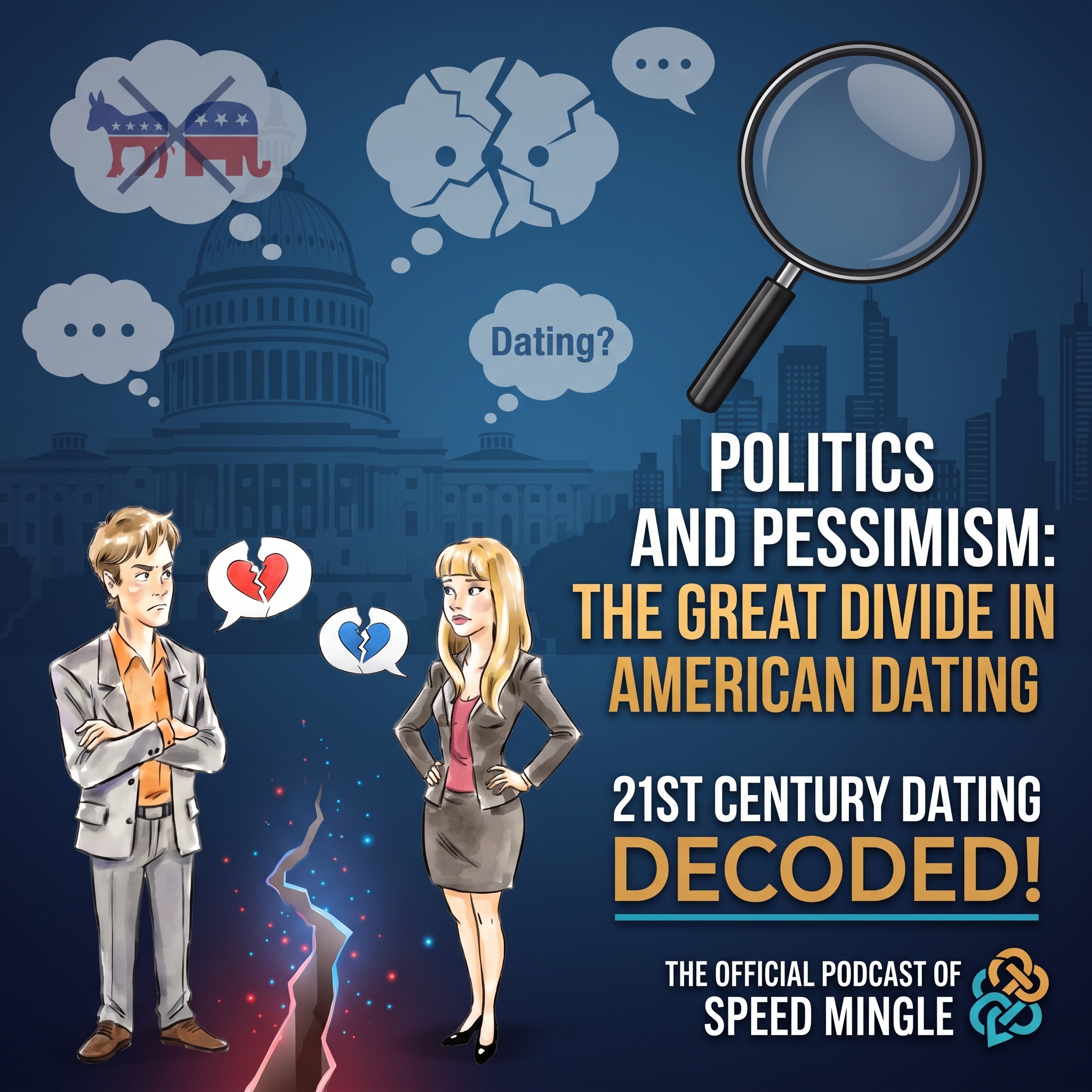
For generations, American popular culture and marital sociology operated under a celebrated romantic axiom: opposites attract. Interpersonal differences—whether in temperament, regional origin, or cultural taste—were historically viewed as friction points that added texture and vigor to a partnership. Today, however, within an increasingly polarized socio-political landscape, one specific axis of difference has transitioned from a point of healthy debate to an absolute, non-negotiable barrier: political party affiliation. What was once a secondary background variable on a preliminary date—or a sensitive topic politely sequestered until a domestic partnership was firmly established—has rapidly metastasized into a primary screening mechanism. Driven by intensifying affective polarization, algorithmic sorting mechanisms on commercial platforms, and shifting socio-cultural norms, single Americans are enforcing ideological boundaries with unprecedented rigor. Political alignment is no longer merely a preference in modern courtship; it has become the baseline requirement for romantic entry.
Recent demographic tracking and sociological analytics indicate a structural shift in how unattached individuals evaluate prospective partners. Long-term surveys conducted by the Pew Research Center, the American Enterprise Institute’s Survey Center on American Life, and academic researchers demonstrate that shared political values have outpaced traditional measures of compatibility—including common religious backgrounds, similar socioeconomic status, and matching educational attainment—when singles construct their criteria for a long-term match. When an individual discloses their political orientation before establishing a personal rapport, that single data point systematically reframes their entire persona, as modern daters increasingly utilize partisan labels as cognitive proxies—shorthand metrics that dictate their assumptions regarding a prospective partner’s core ethics, daily lifestyle habits, and underlying moral integrity. Data reveals that this reluctance to cross ideological lines is asymmetrical across the political spectrum, as multiple studies consistently illustrate that progressive and liberal-leaning singles—most notably college-educated young women—enforce vastly stricter partisan filters than their conservative or moderate counterparts.
Sociologists define affective polarization as the tendency of partisan individuals to view members of their own political group with warm, positive sentiment while harboring intense emotional animosity and distrust toward members of the opposing out-group. In the realm of contemporary dating, this psychological phenomenon does not merely manifest as a mild affinity for like-minded individuals; it functions as an aggressive penalization mechanism against ideological out-groups. Comprehensive studies evaluating young adults on digital match-making interfaces have isolated three core structural drivers behind the collapse of cross-partisan romantic connections: assumed total-lifestyle incompatibility where categorical political tags are presumed to predict everything from consumer habits to media consumption; social network contagion and the fear of interpersonal friction or disapproval from peer groups and family members; and the deep moralization of policy positions, wherein public policy debates regarding healthcare, reproductive bodily autonomy, and civil rights are no longer evaluated as administrative disagreements, but as direct evaluations of a candidate’s baseline empathy and fundamental human decency.
While digital platforms have amplified these divides, the rejection of political out-groups is also anchored in deep-seated bio-behavioral systems. Pioneering research led by political scientists Rose McDermott, Dustin Tingley, and Peter K. Hatemi suggests that political orientation correlates remarkably high among long-term spouses, with alignment coefficients ranging between 0.60 and 0.75—a degree of assortative mating surpassed only by religious endogamy and far exceeding correlations for personality traits or intelligence. Crucially, this ideological alignment is not merely the result of long-term cohabitation or mutual persuasion; it is driven by subconscious biological selection mechanisms, particularly olfactory cues.
To evaluate these subconscious physical markers of ideological attraction, researchers designed a controlled olfactory protocol where subjects provided raw body odor samples under strict controls that excluded scented products, specific foods, alcohol, and pets. Evaluators who smelled these unlabelled samples consistently assigned statistically significant higher ratings of physical attraction and pleasantness to the body odors of individuals who shared their own political ideology, while categorize the scents of political out-group members as unappealing or actively repulsive. This subconscious mechanism is mediated by the olfactory bulb, which maintains direct neural pathways to the amygdala and the hippocampus, bypassing higher-order conscious reasoning. Central to this process is the disgust sensitivity pathway, wherein individuals with higher physiological sensitivity to visceral disgust stimuli consistently align with conservative social orientations regarding bodily purity and reproductive norms. When exposed to the Major Histocompatibility Complex variants and physiological markers present in sweat, the human brain processes these signals as indicators of prospective partner suitability, causing the exact same biological stimulus to yield diametrically opposed evaluations depending on the evaluator’s political disposition.
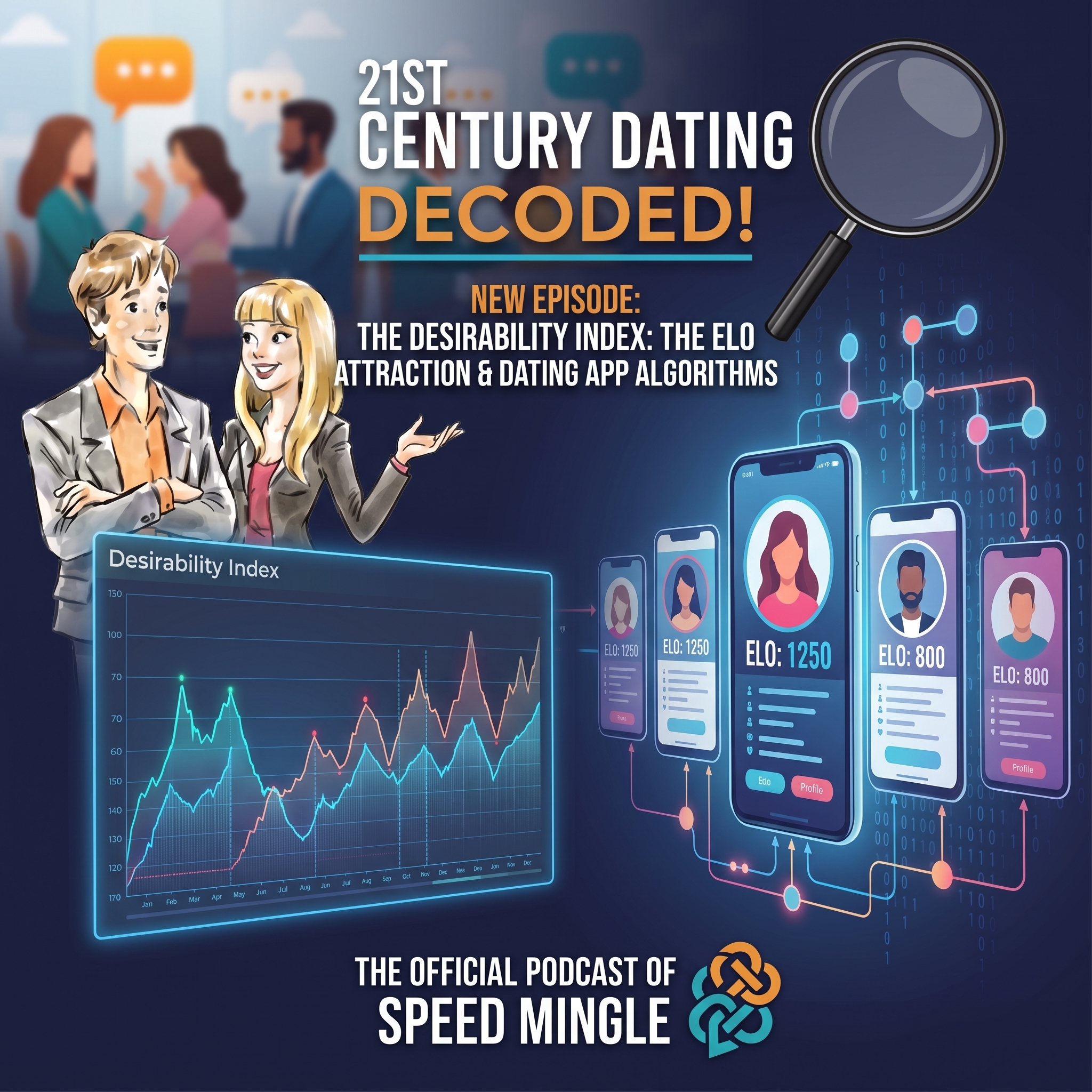
The technological ecosystem of contemporary dating has systematically institutionalized political screening to cater to these preferences. Major consumer applications—including Hinge, Bumble, and OkCupid—have introduced prominent political profile badges and subscription-based filtering parameters that allow users to exclude non-matching candidates prior to any direct interaction. While these features are marketed as tools to increase matching efficiency, social scientists emphasize that algorithmic filtration accelerates political homogamy—the demographic phenomenon wherein individuals pair exclusively with those who mirror their existing ideological matrix. When domestic households become ideologically uniform, shared political convictions are reinforced without internal challenge and subsequently transmitted to offspring, systematically shrinking the broader social terrain necessary for democratic deliberation and civic compromise. Data from the Stanford Graduate School of Business underscores this digital division, revealing that shared political affiliation increases messaging rates on dating platforms at magnitudes comparable to shared educational background and race.
The ideological rift in contemporary dating is further compounded by a widening generational and gendered divide, particularly within Generation Z. Unlike older demographics, whose political views often evolved through real-world labor, civic associations, and physical communities, younger cohorts have been heavily socialized through algorithmically mediated digital environments. Surveys reveal a stark divergence in expectations surrounding gender roles and personal autonomy between young men and women, with young women expressing significantly higher skepticism toward prospective male partners and young men demonstrating a marked resurgence in traditional expectations regarding domestic authority and female independence. This digital mediation creates a profound perception gap, wherein minor social differences or awkward interactions—historically resolved through offline exposure and interpersonal goodwill—are instantly amplified by online discourse into categorical red flags and threats to personal safety.
The collapse of cross-partisan romance carries structural ramifications that extend far beyond individual singlehood, posing long-term challenges to broader social cohesion. According to longitudinal analyses published by the Institute for Family Studies, politically mixed marriages now constitute less than 4% of all married households in the United States, down from significantly higher estimates in late 20th-century demographic studies. Historically, politically heterogeneous marriages served as vital social bridges, forcing extended families, in-laws, and local communities to engage empathetically across ideological lines. The disappearance of these unions removes a critical buffer against affective polarization. Furthermore, by superimposing strict ideological filters onto existing criteria such as geographic proximity, age, lifestyle habits, and educational background, singles drastically restrict their potential match pool, directly contributing to elevated rates of loneliness, dating fatigue, and voluntary withdrawal from the romantic marketplace. As political identity continues to serve as an uncompromising filter for personal intimacy, modern courtship increasingly mirrors the broader body politic: divided into distinct, non-overlapping echo chambers where personal connection requires total ideological alignment.
🎧 Listen on the Go: Apple Podcasts, Spotify, YouTube Music, Amazon Music, Audible, iHeart Radio, or Deezer.
📺 Watch on Speed Mingle TV: YouTube, Roku, Amazon Fire TV, or HRB TV.
🌐 Subscribe & Learn More: 21stcenturydatingdecoded.com
If you’re ready to stop relying on outdated dating narratives, hit subscribe, leave a 5-star review, and share this episode with a friend who desperately needs a dating app intervention!
#21stCenturyDatingDecoded #SpeedMingle #DatingIn2026 #PoliticalPolarization #DatingAppCulture #AffectivePolarization #ModernDating #RelationshipAdvice #DatingTrends #Relationships Matter