

Speed Mingle News
Private Heart, Public Feed: Navigating life on the feed.
Published on Wednesday, OCtober 14, 2026
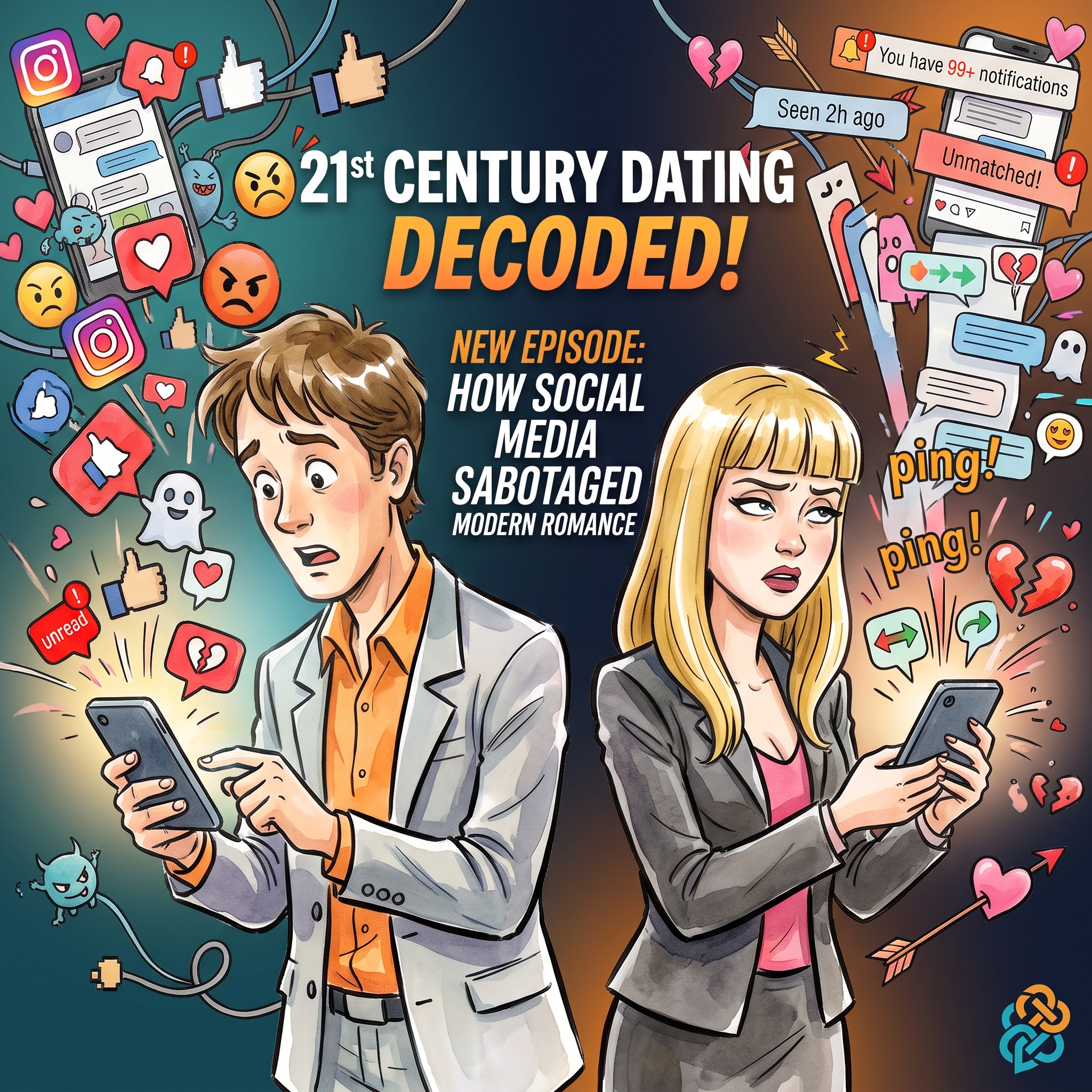
In an era where a relationship’s lifecycle is soft-launched, documented, and dissected across digital networks before a second date even occurs, singles are confronting a quiet crisis: the complete commodification of their private emotional lives.
The paradox of modern romance is stark. While 21st-century dating culture has successfully dismantled restrictive traditional norms and normalized the open expression of desire, it has simultaneously eroded the boundary, privacy, and deliberate pace required to nurture lasting human connection.
“We’ve liberated our appetites, but we’ve completely lost the container,” observes cultural commentator Alice, co-host of the podcast 21st Century Dating Decoded! “We broadcast our vulnerability to hundreds of strangers on social media for instant validation, yet we struggle to maintain basic intentionality when sitting across from a real person at a dinner table.”
The Lede: The New Front Stage of Digital Intimacy
As intimacy migrates to the glass screen, sociologist Erving Goffman’s classic theatrical stage has expanded into an endless, algorithmic grid. Modern computer-mediated communication platforms have transformed once-private human relationships into calculated public performances, forcing individuals to manage the delicate boundary between personal vulnerability and strategic audience engagement. Across modern feeds, the act of falling in love or breaking up is no longer merely felt; it is broadcast, curated, and parsed by an omnipresent digital audience.
Every uploaded photograph, tagged handle, and cryptic caption now functions as a deliberate micro-performance within digital environments. Internet users across diverse demographic groups find themselves perpetually weighing the emotional sanctuary of personal privacy against the compelling social drive for digital visibility. This ongoing friction between the “private heart”—representing genuine, unscripted offline connections—and the “public feed”—representing the polished, performative digital persona—highlights how deeply sociological principles govern contemporary online behavior. Rather than abandoning their real-world identities, modern users utilize social platforms to edit, embellish, and project their relational status to watching networks. Consequently, contemporary relationship milestones are no longer defined solely through private conversations; they are continuously negotiated on the public stage through low-risk “soft launches,” subtle digital boundary enforcement, and discreet disconnections.
Dissecting these contemporary digital maneuvers requires turning to the foundational sociological frameworks that explain how human beings present themselves under the persistent gaze of an audience.
Theoretical Grounding: Goffman’s Dramaturgy and the Edited Self
Sociological theory provides an indispensable analytical framework for dissecting how individuals navigate modern digital platforms. As electronic environments have evolved from simple textual interfaces into media-rich social networks and immersive virtual spaces, classic sociological models offer vital insights into how technology transforms face-to-face social dynamics into structured digital performances.
In his seminal dramaturgical model articulated in The Presentation of Self in Everyday Life, sociologist Erving Goffman conceptualized human interaction as a theatrical performance wherein individuals act as performers on a stage. When an individual enters the “front stage,” they are conscious of being observed by an audience and adhere to social conventions to project a desirable persona while avoiding losing “face.” Conversely, in the “back stage,” where no audience is present, the actor relaxes their performance and steps out of character.
As re-examined in constructivist case studies of bloggers and virtual world inhabitants, this framework applies directly to digital communications. While Goffman originally viewed early technological mediation as a marginal departure from the “primordial real thing” of face-to-face interaction due to a lack of physical cues, modern digital environments provide rich markers, including custom layouts, multimedia gadgets, and curated photos, that enable elaborate impression management.
Crucially, empirical research reveals that digital users rarely adopt entirely ungrounded, fabricated alter egos. Instead, participants actively re-create their offline selves online, systematically editing, embellishing, and highlighting specific facets of their offline identity while suppressing others. In doing so, users navigate Goffman’s distinction between “expressions given”—the deliberate, controlled messages intended to produce a specific impression—and “expressions given off”—unintended cues received by the audience. Online platforms expand users’ ability to maximize expressions given while suppressing uncalculated expressions given off, positioning individuals as active editors of their self-representations.
This identity construction operates through partial masking, where users repress certain personality traits while supplementing others. Furthermore, users utilize secondary profiles or alternative accounts (“alts”) to segment professional and personal audiences, dividing the self across distinct digital spaces to maintain contextual appropriateness. However, the protective barrier of digital pseudonyms remains vulnerable to involuntary unmasking; once unmasked on the public stage, performers lose control over expressions given off, incurring severe reputational and professional consequences in their offline lives.
The Mechanics of Curation: Soft Launches, Hard Launches, and Digital Disconnection
The rapid emergence of modern dating slang and relationship curation tactics reflects a broader shift toward strategic identity management across social feeds. As romantic relationships unfold within public digital spaces, a specialized lexicon has developed to describe the precise mechanics by which individuals introduce, showcase, or sever interpersonal connections online.
The practice of “soft-launching” a relationship represents a primary technique of low-risk impression management. Originally coined by actress Rachel Sennott in a 2020 tweet—”Congratulations on the soft launch of ur boyfriend (pic on story, elbow and side profile only)”—the concept borrows from corporate marketing, where a soft launch involves releasing a product quietly to a limited audience before a full rollout. In modern dating, soft-launching allows individuals to tease a new romantic partner through subtle, aesthetic social media posts that signal the presence of a partner without disclosing their identity.
Rather than relying on explicit declarations, Gen Z and younger Millennial cohorts implement soft launches through highly specific visual strategies:
Hand or shoe photographs, such as intertwined fingers across a cafe table holding coffee cups, or two pairs of sneakers framed side-by-side during a weekend walk.
Back-view or hidden-angle shots, capturing a partner from behind while hiking or showing an unidentifiable knee or arm inside a vehicle.
Untagged group photos, casually positioning a romantic interest within a dinner party shot without tagging their profile, thereby keeping the precise relational dynamic ambiguous to outside observers.
Aesthetic date-night setups—featuring a lit table framed with two wine glasses, two dinner plates, or movie tickets under neutral captions like “Perfect night.”
Audio or background presence on short-form video platforms, such as a partner’s off-screen voice or a blurry mirror reflection.
Deliberate cropping and muted tags, cropping out a partner’s face or tagging their handle while muting the tag so the handle remains hidden unless directly tapped.
The psychological utility of soft-launching lies in its capacity to protect emotional privacy and pace relationship commitment. By maintaining deliberate ambiguity, individuals celebrate nascent romance while shielding themselves from public scrutiny, familial intrusion, or the administrative embarrassment of purging main-feed posts if the relationship dissolves early. Additionally, soft launches allow users to signal their non-availability to prospective suitors or ex-partners without committing to a high-stakes public announcement.
In direct contrast, a “hard launch” constitutes a definitive, explicit announcement of a relationship. Borrowed from full corporate product releases, a hard launch features uncropped face reveals of both partners, direct handle tagging, clear physical affection, and unambiguous captions signaling exclusivity, such as “My person” or “Official.” While a hard launch demonstrates public confidence, it drastically increases social stakes; a subsequent breakup forces partners to navigate the visible, public task of archiving or deleting grid photos.
When relationships dissolve or require boundary enforcement, users rely on distinct digital disconnection tactics that balance profile visibility against social stakes:
Soft-blocking—the deliberate technique of blocking and immediately unblocking another user—automatically severs mutual follow connections in both directions without sending a notification or leaving a permanent block in place. Soft-blocking solves the asymmetry of a standard unfollow, where the target user would continue following the individual. It provides plausible deniability, as target users typically attribute the severed connection to a platform glitch, allowing individuals to quietly revoke front-row access to their daily lives after breakups, fading friendships, or workplace transitions. Modern platforms often mirror this capability through direct “Remove Follower” buttons. By comparison, muting simply hides an account’s posts from a user’s feed while preserving the public connection, carrying zero social drama.
These curation mechanics exist alongside a wider taxonomy of non-committal, deceptive, or boundary-testing dating behaviors:
Orbiting: Occurs when an individual severs direct communication with an ex in real life while continuously viewing their social media stories and liking their posts.
Breadcrumbing: Involves sending sporadic, low-effort digital flirtations to keep a partner on the hook without intending to commit.
Pocketing: Refers to intentionally hiding a partner by omitting them from social feeds and keeping them separate from friends and family.
Roaching: Describes concealing the fact that one is actively dating multiple individuals simultaneously under the guise of monogamy.
Wokefishing: Occurs when someone presents themselves online as more progressive or socially conscious than they are in reality to attract dates.
Zombie-ing: Describes a former partner resurfacing out of nowhere after ghosting.
Benching: Involves keeping a potential romantic interest in reserve as a backup option while pursuing primary prospects.
Cyberpsychology and Generational Realities: Gender, Generation, and Attachment
Evaluating computer-mediated communication through demographic and psychological frameworks reveals critical nuances in how different populations experience digital interactions. Cyberpsychology examines these structural impacts, illuminating how device usage interacts with emotional regulation, anxiety, and relational attachment styles.
Recent qualitative and quantitative empirical research examining computer-mediated communication across digital generations—Generation Z, Millennials, Generation X, and Baby Boomers—and between genders illustrates distinct generational attitudes toward digital communication. Generation Z demonstrates seamless fluency across online and offline environments, utilizing visual tools like stickers, memes, and short video clips to convey complex emotions, with asynchronous text-based communication providing a protective delay that allows individuals to reflect before responding. Millennials express a strong preference for face-to-face interaction, noting that digital exchanges often lack emotional depth and are highly susceptible to misinterpretation. Generation X values digital tools primarily for practical utilities, such as coordinating professional obligations or maintaining contact with distant family members. Meanwhile, Baby Boomers treat digital platforms as strictly supplementary tools, relying on pre-digital coping mechanisms, structured routines, selective social engagement, and direct personal support.
Crucially, quantitative analyses reveal that gender often emerges as a primary driver of psychological distress in digital environments. Evaluations utilizing standard psychometric scales demonstrate that across younger cohorts, women exhibit elevated emotional regulation difficulties, anxiety symptoms, and depressive symptoms compared to men when navigating heavy digital mediation. Furthermore, the communication context moderates these outcomes: individuals utilizing digital devices intensively for partner communication score higher on indices of emotional dysregulation, demonstrating that digital channels can actively intensify psychological distress within romantic contexts.
Psychological attachment styles further dictate how individuals internalize digital relationship displays:
Anxious-Attached Partners: Individuals with anxious attachment crave constant emotional reassurance and validation. For these partners, a decision to soft launch (rather than hard launch) can trigger acute anxiety. They frequently interpret intentional vagueness or untagged photos as evidence of a partner’s reluctance to commit or a desire to remain publicly available to alternative romantic prospects.
Avoidant-Attached Partners: Individuals with avoidant attachment prioritize self-reliance, autonomy, and personal boundaries. These partners often perceive soft launching—or any public display of relationship dynamics—as performative, intrusive, or excessively revelatory, actively resisting public feed exposure to safeguard their independence.
These psychological friction points underscore the protective value of relationship privacy. Limiting social media exposure shields couples from public scrutiny, unsolicited opinions, and destructive social comparison against idealized online relationships. Preserving relationship privacy minimizes external drama, prevents the impulse to overshare private disagreements, and protects the genuine spontaneity that sustains romantic bonds offline.
The Search for the Structural Remedy: The Speed Mingle Ecosystem
As app fatigue hits an all-time high, daters are actively seeking environments that restore structure, safety, and physical presence to the meeting process.
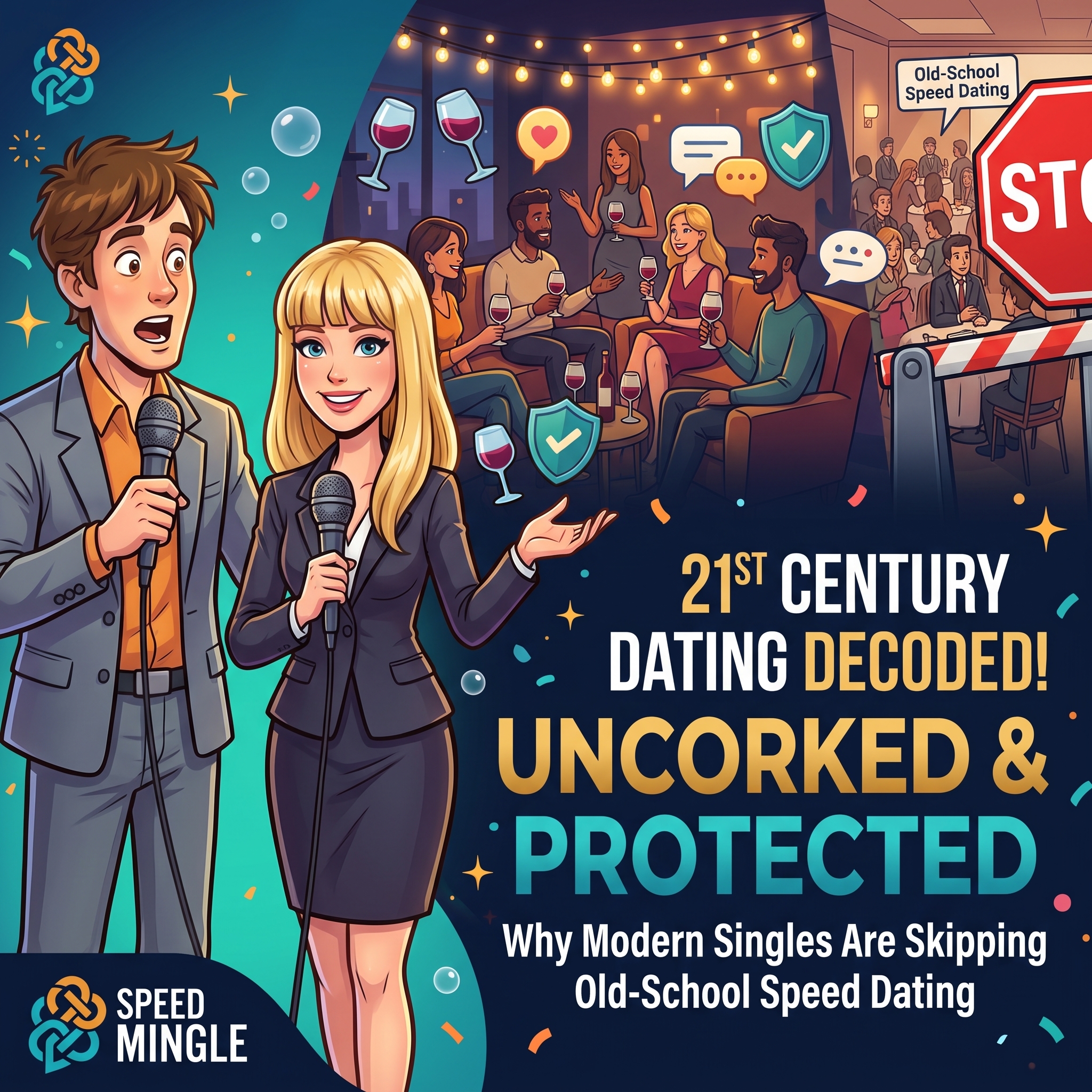
Enter platform ecosystems like Speed Mingle, which are restructuring modern social interaction by removing profile-swiping in favor of intentional, multi-modal networking. Rather than relying on static photos or endless messaging loops, the platform emphasizes deliberate, real-life touchpoints across distinct social categories:
Speed Mingle Anywhere™: Guided, face-to-face video interactions designed to evaluate chemistry from home before committing to an in-person date, eliminating weeks of aimless text marathons.
Speed Mingle Social™: Unstructured, non-hosted weekly meetups at neighborhood venues, offering low-pressure community environments for organic conversation.
Speed Mingle Happenings™: Activity-based mixers focused on shared experiences—such as trivia, culinary workshops, or interactive games—to completely bypass forced small talk.
Speed Mingle Neighbors™: Local social events geared toward building authentic platonic friendships and expanding community networks without romantic expectations.
Speed Mingle B2B™: A high-octane “round-robin” professional networking format engineered to expand career connections efficiently and authentically.
Speed Mingle One to One™: A personalized, pre-vetted meeting experience launching in Fall 2026, focused on deep compatibility metrics rather than superficial profile browsing.
“The goal is simple: eliminate the friction that causes burnout while re-introducing clear boundaries and real-world presence,” notes Zack, lead co-host of 21st Century Dating Decoded! “When you move interaction off the passive scroll and into structured environments, you give people permission to be authentic again.”
The Future of Intimacy in an Interconnected World
Achieving personal balance in an era dominated by public digital feeds requires a conscious decoupling of authentic relational health from online visibility. As digital platforms continue to embed themselves in daily life, individuals face the ongoing challenge of negotiating the boundary between public impression management and genuine private intimacy. Modern social media feeds inherently present a highly curated, edited sliver of human experience rather than an accurate representation of offline reality. When individuals treat online displays as absolute benchmarks for relational success, the resulting social comparisons inevitably induce anxiety, insecurity, and dissatisfaction.
Research within cyberpsychology demonstrates a clear inverse relationship between hyper-curated online exposure and genuine relationship satisfaction. Elevated levels of social media activity, particularly on platforms oriented around visual curation, have been empirically linked to decreases in overall relationship satisfaction. Conversely, long-term relational stability and emotional fulfillment remain overwhelmingly driven by unrecorded offline investments, including effective conflict resolution, mindful presence, emotional vulnerability, and mutual sacrifices made entirely out of view of a digital audience.
As digital interactions become further integrated into human relationships, safeguarding psychological well-being will depend on establishing deliberate boundaries around the public feed. Users who successfully navigate modern digital environments recognize that online identity curation is an elective, front-stage performance rather than a metric of personal truth. By prioritizing private connection over public validation, protecting romantic milestones from public audiences, and respecting individual attachment needs, individuals can foster deep, meaningful human relationships while maintaining total agency over their digital lives.
To preserve psychological groundedness and authentic connection in a hyper-mediated world, relationship experts emphasize three core principles:
Mind Your “Why” Before You Post: Interrogate internal motives before making romantic milestones public. Evaluate whether sharing stems from genuine celebratory expression or an impulse to seek external validation and compensate for internal relationship insecurity.
Respect Attachment Boundaries: Communicate openly with partners regarding digital comfort levels and disclosure expectations, acknowledging how differing attachment styles process public exposure.
Prioritize the Offline Anchor: Protect the organic growth of romantic and personal bonds by keeping core emotional milestones off the public stage, ensuring that real-world intimacy remains the ultimate anchor of the relationship.
Whether through structured video calls or neighborhood gatherings, the emerging consensus among relationship analysts is clear: true intimacy cannot be automated by an algorithm—it requires showing up, taking risks, and dating with defined purpose.
📱 WHERE TO WATCH & LISTEN:
🎧 Audio & Video Platforms: Stream on Apple Podcasts, Spotify, YouTube Music, Amazon Music, Audible, iHeart Radio, Deezer, YouTube, Roku, Amazon Fire TV, and Google TV (just search “Speed Mingle Network”)!
📱 Mobile Web App: Direct your browser to SpeedMingle.mobi
🌐 Official Hubs: 21stcenturydatingdecoded.com | TheSpeedMingle.com
📲 Follow Us: @TheSpeedMingle
Smash that subscribe button, drop us a 5-star review, and share this episode link with that friend who still uses an expired filter on a dark headshot! 😉📲
Until our subsequent episode: remain deliberate, maintain protection, and consistently date with a defined purpose. ✨💬
#21stCenturyDatingDecoded #PrivateHeartPublicFeed #SpeedMingle #ModernDating #PerformativeIntimacy #DatingAppBurnout #MixMatchMingle #RelationshipPsychology #DatingAdvice #DigitalIntimacy #DatingPodcast #SpeedMingleNetwork