

Speed Mingle News
The “Inflationship”: Economic Pressure as an Influence on Contemporary Relationships
Listen to the Podcast Short at: Apple Podcast | Spotify | YouTube
Published on December 6, 2025
Brad Peters, Chief Development Officer, Director, CEO of Speed Mingle
As the year 2025 concludes, the prevailing climate of persistently elevated living costs has exerted an influence beyond the tightening of household budgets, fundamentally reshaping the dynamics of modern romance and courtship. The significant financial strain—typically associated with mortgage costs, escalating grocery expenses, and spiking energy prices—has permeated the most personal aspects of life, giving rise to a novel socio-economic phenomenon: the “Inflationship.” This shift constitutes more than a mere adjustment in discretionary spending; it represents a profound re-evaluation of the role of fiscal matters in emotional commitment.
The New Pragmatism: From Exclusive Dining to Frugal Recreation
The era characterized by expensive, traditional courtship—involving lavish dinners, premium theater seating, and spontaneous weekend excursions—is receding. In its stead, a distinctly more pragmatic and fiscally conscious approach to dating has become established. Across all demographic cohorts, from Gen Z entering the dating pool to older millennials seeking enduring partnerships, couples are gravitating toward low-cost engagements.
This strategic recalibration prioritizes shared experiences that maximize time together while minimizing financial outlay. Coffee meetings have supplanted dinner reservations; extended park walks and hiking activities now represent the norm over ticketed cultural events; and utilizing free museum days or library access provides cultural enrichment without the prohibitive cost. This is not solely an inclination toward simplicity; it is a meticulously calculated strategy for financial resilience. The emphasis has decisively shifted from the monetary value spent on an activity to the intrinsic, emotional substance of the interpersonal connection. This austerity, born of necessity, compels couples to forge bonds on a deeper, more authentic level, driven by the imperative to safeguard dwindling savings and discretionary income. The integrity of the relationship is now assessed less by extravagant demonstrations and more by shared fiscal responsibility and resourceful financial management.
The Expediting of Commitment: The Emergence of “Move-In-flation”
Perhaps the most significant and structurally impactful change within this contemporary economic environment is the accelerated adoption of cohabitation, a pattern analysts have termed “Move-In-flation.” Couples are now choosing to reside together at a pace considerably faster than traditional societal benchmarks, which typically reserved cohabitation for a pre-engagement phase.
The impetus for this early consolidation is explicitly less about achieving a romantic milestone and substantially more focused on securing immediate, critical fiscal relief. The mathematical benefit is irrefutable: dividing a rapidly inflating rental payment, sharing utility expenditures, and reducing overall household overhead provides a direct and immediate improvement to the financial stability of both individuals. While this maneuver effectively mitigates immediate cash-flow challenges and establishes a necessary buffer against inflationary pressures, it introduces complex and frequently challenging considerations regarding the emotional and relational maturity of partnerships founded primarily on financial expediency rather than emotional readiness. Analysts caution that while the joint lease agreement may be executed, the emotional infrastructure requisite for long-term cohabitation may be perilously underdeveloped, thereby imposing undue strain upon the relationship.
The Constraint on Singles: Anxiety and Economic Incentives
For single individuals navigating this landscape, the “Inflationship” era generates a unique and intense array of anxieties. The financial burden intensifies substantially as high living costs converge with individual expenses. As significant expenditures—such as holiday spending, travel, or even essential self-care—become imminent, the pressure to secure a committed partner has become more pronounced and transactional.
In this hyper-vigilant economic climate, a committed partnership offers a distinct and potent competitive advantage: specifically, the capacity to halve recurring financial obligations. Consequently, the inherently romantic pursuit of a soulmate has become inextricably linked with the pragmatic search for a co-tenant. This underlying economic incentive subtly, yet powerfully, obscures the distinction between genuine romantic aspiration and the pursuit of essential economic stability, thereby complicating the motivations underpinning dating and commitment.
Sustained Viability Beyond Divided Expenses
The “Inflationship” serves as a stark and sobering illustration of the pervasive and deep-reaching extent to which macro-economic forces influence our most personal and intimate lives. As romantic relationships develop rapidly under considerable financial duress, experts and relationship therapists universally caution that the long-term viability and resilience of these partnerships depend upon far more than merely the ability to share expenses.
Financial transparency and open, candid discourse concerning all aspects of personal and shared finances are no longer merely advisable; they are unequivocally mandatory. In a relationship partially forged by economic necessity, this level of explicit financial planning constitutes the sole reliable means of ensuring that a shared residence forms a true foundation for an enduring, resilient partnership, rather than serving as merely a temporary, tactical refuge from economic pressures.
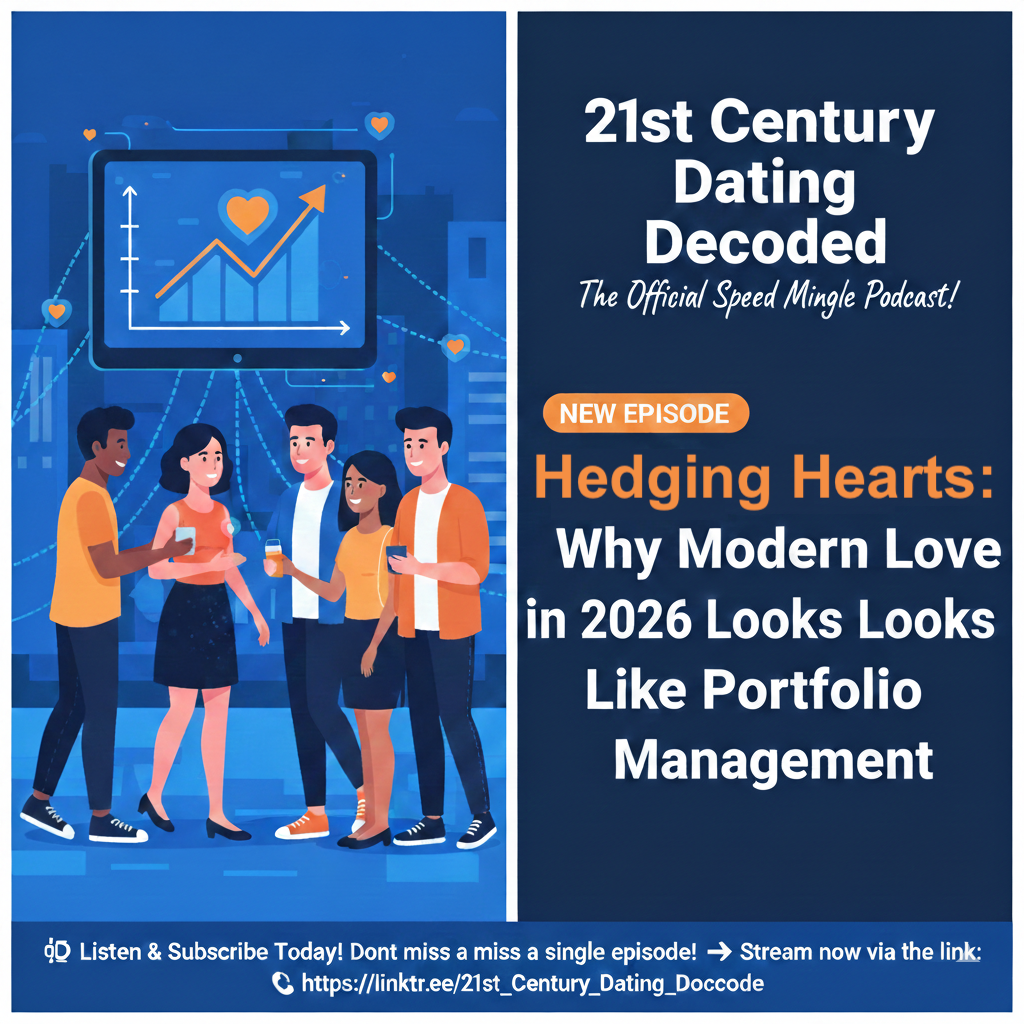
🎧 Listen now wherever you get your podcasts! https://linktr.ee/21st_Century_Dating_Decoded
#Inflationship #DatingAdvice #MoveInFlation #ModernRomance #Podcast #DatingDecoded #SpeedMingle #Economy #Relationships