

Speed Mingle News
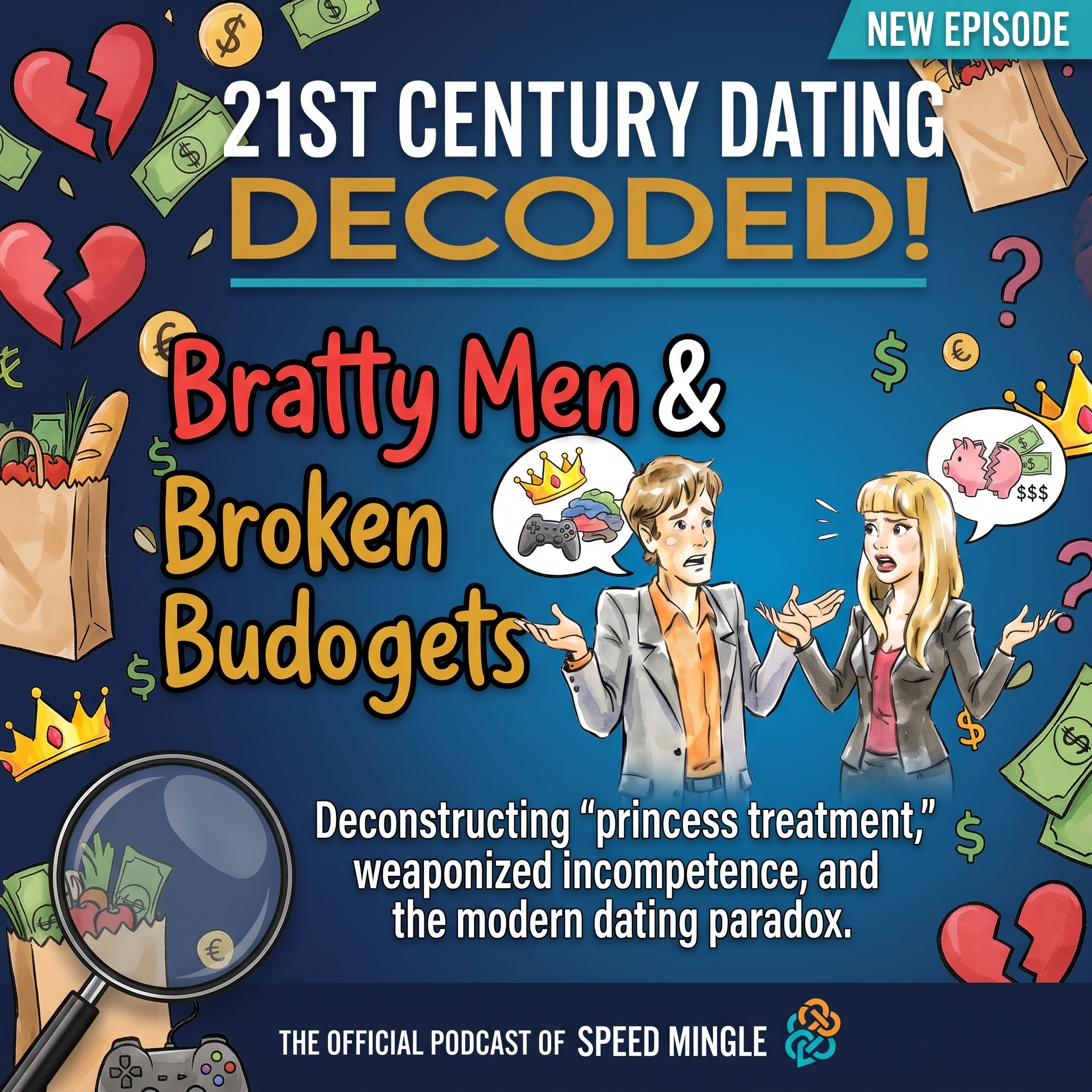
Bratty Men & Broken Budgets
Published on Thursday, November 12, 2026
The Modern Dating Paradox
Across digital feeds and offline dating markets, young daters are locked in a profound relational impasse where shifting pop-culture ethos, economic strain, and systemic emotional isolation collide. Modern romance has reached a flashpoint: as women increasingly adopt a bold, self-expressive posture while demanding chivalric financial investment, a growing contingent of men is retreating into behavioral stagnation and emotional incompetence. What presents on social media as playful commentary over dating etiquette masks a structural failure in how young adults navigate intimacy, process vulnerability, and manage romantic expectations under heavy economic stress.
At the center of this cultural friction lies a sharp divergence in gendered expectations. Pop culture has witnessed the strategic rebranding of “brat”—a movement catalyzed by pop icon Charli XCX that transforms a historically negative label for unruly behavior into a celebrated signifier of being confidently rebellious, unapologetically bold, and playfully defiant. As women embrace this liberated identity and raise the bar for romantic effort through consumer-driven demands like “princess treatment”—a dating expectation rooted in gallantry, lavish pampering, and active financial devotion—they meet a stark counter-reality. Millions of young men are buckling under acute precarity, career uncertainty, and financial fatigue. Landmark sociological findings from Equimundo’s State of American Men 2023 report reveal that a staggering two-thirds of young men feel that “no one really knows” them. When elevated expectations for financial and emotional investment encounter a male demographic paralyzed by loneliness and economic insecurity, modern relationship models collapse under the weight of unfulfilled promises.
This crisis of connection is accelerated by a structural displacement of the real-world community. Young adults now live their lives inside digital ecosystems whose scale completely eclipses traditional social institutions. Trapped between algorithmic echo chambers and shifting romantic norms, daters are finding that digital hyper-connectivity frequently produces real-world romantic alienation. To understand why modern romance has broken down so systematically, cultural analysis must examine both the individual psychological mechanisms driving behavioral retreat and the digital platforms that capitalize on male insecurity.
The Eternal Child in the Dating Market
To understand why romantic dynamics buckle under pressure, investigative analysis must look past surface-level complaints and scrutinize developmental stagnation within the individual. Macro-level relationship trends are ultimately shaped by internal psychological blueprints, and individual avoidance serves as the primary engine for broader romantic breakdown.
Psychoanalytic researcher Rafael Krüger traces much of this relational paralysis to the Jungian archetype of the Puer Aeternus —and its counterpart, the Puella Aeterna —the eternal child. Individuals governed by this psychological structure are often bright, highly imaginative, and naturally gifted. However, their downfall stems from an intellectual arrogance that takes inherent talent for granted. Armed with sharp intellects, they acquire a dangerous “half-knowledge” that exists entirely in theoretical abstraction without the grounding of lived experience or physical effort. As Krüger observes, these individuals become profound hypocrites: their exalted ideals collapse when tested against reality, yet they remain too terrified of failure to commit to mastering a craft, maintaining a discipline, or serving a purpose greater than their own egos.
In contemporary dating, this psychological retreat manifests directly as “weaponized incompetence.” Operating under the grandiose delusion that standard self-improvement advice is “beneath them,” the Puer overcomplicates basic problems and manufactures unnecessary drama to evade practical effort. Krüger notes that the primary shadow of the Puer encompasses the physical body and the practical aspects of daily life. When confronted with the mundane responsibilities of partnership—such as maintaining basic self-care, establishing stable routines, managing domestic tasks, and engaging in honest communication—the eternal child feigns inability or orchestrates chaos. By intellectualizing simple issues and abandoning practical labor, they force their romantic partners to carry the entirety of the mental and emotional load.
This behavioral dynamic creates immediate friction with partners embracing high-standard dating models. When a woman demanding elevated effort and accountability encounters a partner trapped in Puer avoidance, the relational structure disintegrates. Overcoming this pattern requires transitioning from grandiose fantasy to grounded action. Healing does not mean eradicating the inner child, as the Puer Aeternus represents the divine child archetype—a vital source of vision, playfulness, and creative energy. Rather, it requires conquering childishness so those gifts can operate within a mature psychological vessel. In Krüger’s framework, psychological struggles cannot be thought through; they are solved exclusively through movement and concrete physical action. Lasting maturity is built incrementally by relinquishing megalomaniac fantasies, accepting basic responsibilities, and establishing daily discipline. The magical solutions avoidant daters seek remain buried within the mundane, routine choices they work so hard to sidestep.
Algorithmic Grievance and Exploited Isolation
As internal psychological avoidances leave young men ill-equipped for real-world partnership, digital platforms stand ready to monetize their isolation and weaponize their romantic frustration. The digital landscape has superseded physical institutions as the dominant environment shaping male identity, emotional processing, and relationship expectations.
The shift into digital spaces occurs against a backdrop of shrinking offline social infrastructure. Sociological data underscores a stark imbalance: video giant YouTube commands over 2 billion monthly active users, serving as the digital mothership where 59 percent of its audience falls between the ages of 18 and 29. TikTok captures an audience where 60 percent of users are aged 16 to 24, dictating rapid cultural trends and dating lexicons. Synchronous engagement platforms maintain similar demographic holds: Twitch sees 65 percent of its user base fall between ages 18 and 34, while Discord sees 65 percent of its audience between ages 18 and 35. Reddit draws 57 million daily visitors into point-based, community-moderated subreddits, while fantasy sports platforms engage 62.5 million users across North America through competitive stat-tracking.
Altogether, young men’s digital consumption vastly outpaces their participation in traditional offline social organizations by a factor of at least 1,000. For context, only 7 percent of American men report membership in a college fraternity, while enrollment in Scouting America has contracted to roughly 1 million boys.
According to The Manosphere, Rewired, a landmark study by gender justice organization Equimundo, this digital saturation collides directly with male precarity. As young men grapple with economic uncertainty, mental health challenges, and relationship failures, manosphere content creators utilize search engine optimization (SEO) and platform algorithms to intercept vulnerability. When a young man searches online for dating advice, fitness guidance, or help managing loneliness, algorithms frequently funnel him toward creators who package grievance narratives behind a veneer of respectable debate.
These digital spaces exploit male insecurity through targeted emotional validation. They validate real pain—such as feelings of rejection or confusion over shifting gender roles—but immediately pivot to external blame, pointing to feminized educational structures, absent father figures, or rigged social systems. Influencers fixate heavily on financial dominance, hyper-independence, and physical intimidation, instilling harmful doctrines that advocate for men maintaining the capacity to physically dominate women. By offering rigid rules and dogmatic scripts for success, the manosphere converts personal romantic failure into collective political grievance, compounding real-world isolation under the guise of male empowerment.
Navigating Expectations, Fears, and Digital Lifecycles
The collision between online subcultures and real-world dating creates severe friction between daters, content creators, platform moderators, and behavioral experts. While young men absorb digital doctrines centered on physical dominance, status, and financial tracking, women are establishing elevated benchmarks for emotional literacy, shared responsibility, and respectful partnership.
This divide highlights a critical mismatch between male performance anxiety and the practical skills required for genuine intimacy. Young men frequently invest energy into strength training, tech expertise, or financial metrics to validate their worth, yet remain incapable of executing basic interpersonal connections.
The reality of navigating this landscape is articulated by a 34-year-old Discord and Reddit user from
Atlanta interviewed in the Equimundo report:
“It can be very easy to get caught up and lose personal relationships because you’re chasing a broader, bigger audience; you can very easily fall into an impersonal social media reality. But it also has the opportunity to be a beautiful space. You can connect with the individual. You can find a small niche in the communities. You can mute the things that don’t make you happy.”
Research conducted by Equimundo and design firm Puddle maps the explicit multi-stage lifecycle of online male relationships, illustrating why digital connections struggle to convert into lasting real-world bonds. The journey typically begins with matching via common interests on broad public platforms like YouTube, Twitch, or Reddit, where men bond over gaming, tech, or sports. To seek greater intimacy, users transition to synchronous, semi-private platforms like Discord, where they attempt to build trust through shared chat channels.
However, as interactions deepen, acute structural anxieties emerge. Men report intense fears of oversharing, asking overly personal questions, appearing needy, or facing ghosting. Proposing an offline meetup or a smaller private stream carries the paralyzing risk that no one will show up. While a small percentage of digital ties successfully convert into physical encounters through shared activities like fantasy sports leagues, run-tracking apps like Strava, or local third spaces, most online relationships eventually stall out. Without deliberate structural maintenance and clear social skills, interaction frequency declines, causing relationships to decay into loss.
Despite these hurdles, male digital culture is not entirely toxic. Equimundo’s research identifies healthy, constructive online spaces categorized as “Masculinity in the Middle.” Subcultures built around Sports Masculinity foster intergenerational bonding and strategic camaraderie; Maker Masculinity encourages practical craftsmanship and home repair; and Dad Masculinity centers on active caregiving and parental support. Fitness spaces, when detached from manosphere rhetoric, promote physical strength as an element of holistic well-being.
Furthermore, peer-led digital buffers actively mitigate adolescent mental health distress. Platforms like First Step Solutions —a Discord server founded by a 16-year-old nursing student—provide dedicated peer support for teenagers navigating depression, anxiety, and self-harm. Similarly, Next Gen Men offers adolescent boys in grades 7 through 12 a safe online community designed to build healthy relationship skills and prevent gender-based violence. Identifying these positive subcultures illuminates the path from diagnostic critique to actionable societal solutions.
From Digital Fantasy to Grounded Connection
Resolving the modern dating paradox requires a comprehensive framework that pairs institutional digital reform with individual psychological accountability. Society cannot afford to relinquish young men to algorithmic outrage or abandon daters to deep cynicism. Instead, platforms, educators, and mental health professionals must actively call young adults into grounded, authentic partnership.
At the structural level, reform must center on engaging digital leaders where young men already aggregate. Because influencers, gaming streamers, and channel moderators function as 21st-century educators, intervention strategies must partner with them directly under the principle of “nothing about us without us.” Training creators to model emotional maturity, constructive conflict resolution, and healthy relationship dynamics can shift platform culture from the top down.
Concurrently, platforms must invest in moderated safe spaces that provide shame-free environments for men to seek advice, process romantic rejection, and discuss mental health. Utilizing digital design mechanics—a strategy framed as “Give a Win”—platforms can collaborate with behavioral experts to offer interactive guides and simulated social tools. By allowing men to practice dating etiquette, boundary setting, and conversation skills in risk-free virtual environments, digital spaces can help users build practical confidence. Furthermore, platforms must support flexible identity experimentation, allowing young men to explore alternative aesthetics, caregiving roles, and non-traditional social behaviors without fear of peer harassment.
At the individual level, lasting progress depends on adopting Rafael Krüger’s mandate for psychological maturity. Young men must relinquish grandiose fantasies of unearned status and accept that personal growth requires sustained effort. Psychological integration begins with the practical shadow: taking accountability for physical health, proper nutrition, personal hygiene, and structured daily routines. Rather than intellectualizing relationship struggles or fleeing into weaponized incompetence, individuals must tackle immediate workplace and romantic challenges through direct physical action. Conquering childish avoidance builds the mature psychological vessel necessary to transform creative potential into mutual self-respect and lasting partnership.
Ultimately, bridging the modern dating divide requires dismantling the illusion of digital perfection and committing to real-world engagement. While intimate romantic relationships remain essential, psychological research confirms that casual “weak ties”—everyday interactions with acquaintances, neighbors, and local community members in physical third spaces—are equally critical for building emotional resilience and social fitness. By demanding accountability from digital platforms while holding individuals responsible for their personal maturity, society can guide young daters out of isolation and foster enduring human connections.
🎧 Where to Listen & Watch:
Watch & Listen at Apple Podcasts, Spotify, YouTube Music, Amazon Music, Audible, iHeart Radio, Deezer, YouTube, Roku, Amazon Fire TV and Google TV (search “Speed Mingle Network”), or on our mobile web app @ SpeedMingle.mobi.
🌐 Official Hub: 21stcenturydatingdecoded.com or TheSpeedMingle.com
📱 On Social Media: @TheSpeedMingle
⭐ Smash that subscribe button, drop a 5-star review, and share the episode link with that friend who still uses an expired filter on a dark headshot.
✨ Until our subsequent episode: remain deliberate, maintain protection, and consistently date with a defined purpose.”
#ModernDating #BrattyMen #PrincessTreatment #WeaponizedIncompetence #SpeedMingle #DatingAppBurnout #DatingDecoded #PodcastDrop