

Speed Mingle News
From Boundaries to Red Flags: When Therapy Lingo Over-Saturates the First Date
Published on Saturday, July 11, 2026
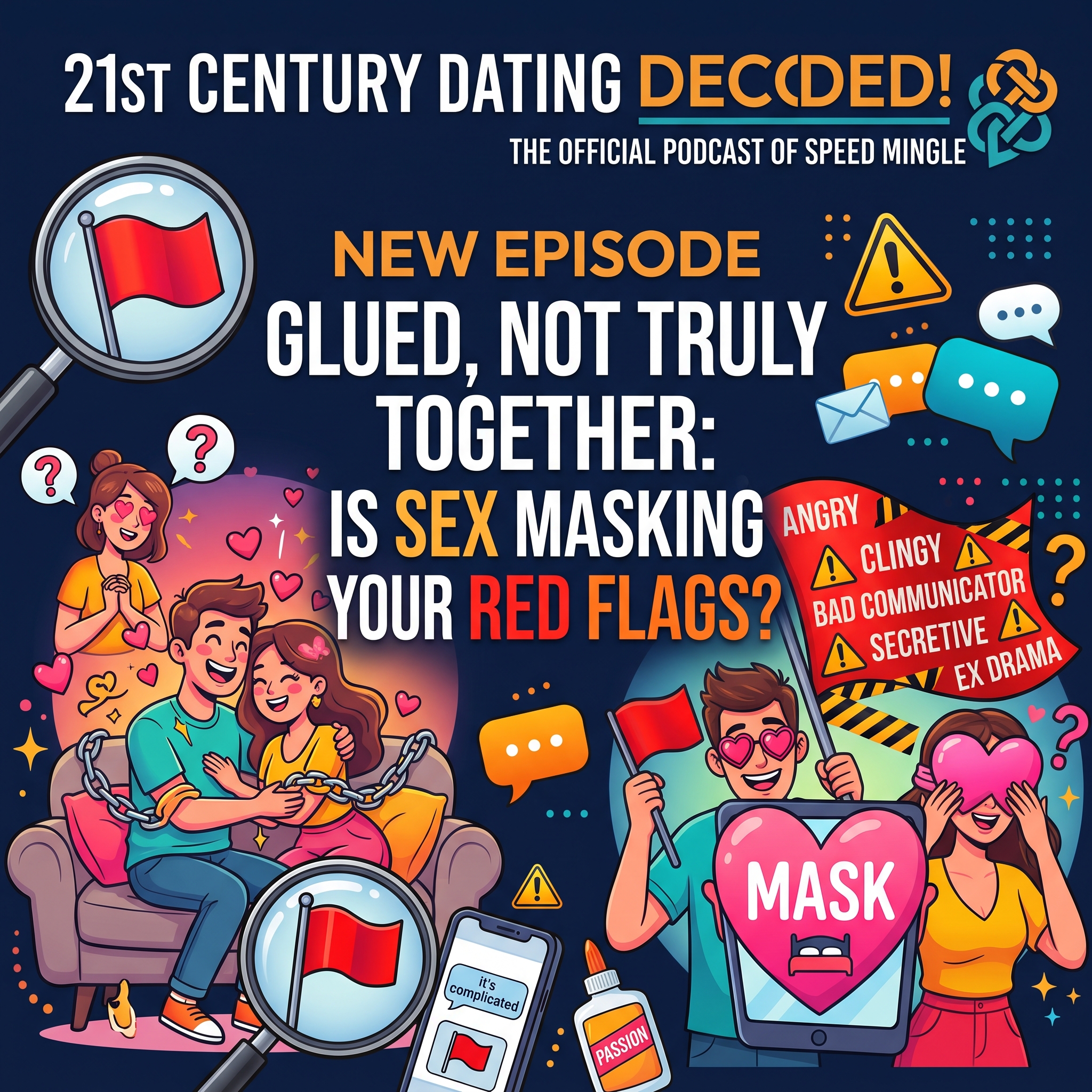
In the modern dating landscape, first dates have transformed from romantic rendezvous into high-stakes psychiatric evaluations. Armed with clinical jargon and a hyper-vigilant obsession with “red flags,” today’s singles are treating potential partners less like human beings and more like psychological profiles. Yet, despite an unprecedented cultural focus on mental health and self-optimization, romantic outcomes are not improving. Instead, daters find themselves trapped in a cycle of digital burnout, emotional defense mechanisms, and neurochemical illusions.
The Rise of Weaponized Jargon and the ‘Therapy Flex’
The mainstreaming of mental health awareness has stripped away the stigma of seeking help, but it has simultaneously introduced an unintended consequence: the weaponization of clinical terminology. Daters are increasingly using highly sophisticated psychological concepts not to foster vulnerability, but to construct emotional fortresses.
Data from the sex-positive app Pure, featured in Cosmopolitan, highlights a stark disconnect between clinical vocabulary and actual behavior:
The “Therapy Flex”: 50% of surveyed individuals find it actively attractive when a date mentions going to therapy on a first date, viewing it as a modern status symbol.
The Reality Check: Only 23% of those respondents believe that these supposedly “healed” daters actually display better etiquette in practice.
The Disconnect: Nearly a third of participants actively disagree that going to therapy inherently makes someone a better partner.
This linguistic evolution has fundamentally altered how people communicate. Ordinary relational friction is routinely pathologized through a series of modern vocabulary shifts:
Traditional ExpressionModern ‘Therapy Speak’ TranslationRelational Impact“I’m picky about who I spend weekends with.””I am fiercely protective of my peace.”Often masks a rigid refusal to compromise.”We just didn’t have much chemistry.””Our nervous systems weren’t co-regulating.”Elevates a minor mismatch into a biological failure.”I disagree with your perspective.””You are invalidating my lived experience.”Treats a basic difference of opinion as a psychological microaggression.”I need some alone time this weekend.””I am setting a boundary because my bandwidth is depleted.”Frameworks normal rest as an impenetrable wall.
Covert Control vs. True Boundaries
In pop psychology circles, this shift is frequently contextualized within the “Jonah Hill dating environment”—named after the highly publicized text message scandal involving the actor. In this environment, the concept of a “boundary” is frequently corrupted. Clinically, a boundary is a rule one sets for their own behavior (e.g., “I will leave the room if I am yelled at”). Today, however, it is routinely misused as a tool for covert control to dictate a partner’s clothing, social circles, or career choices.
Clinical therapist Todd Baratz notes that this extreme obsession with sniffing out red flags is often just anxiety disguised as healthy protection. Rather than searching for compatibility, daters are operating from a state of hyper-vigilance, building fortresses that block genuine human connection.
Meeting ‘The Representative’ and the 3-to-6-Month Crack
A primary paradox of modern hyper-vigilance is that even the most cautious daters still end up entangled with incompatible partners. According to marriage therapist Figzo O’Sullivan, this occurs because individuals do not actually meet the real person during the first few months of dating. Instead, they meet “The Representative.”
The Representative is a polished, hyper-attentive, heavily curated version of a person. They text back promptly, remember minute preferences, and appear entirely free of toxic traits. This is not necessarily a malicious deception; it is an evolutionary survival mechanism designed to secure attachment.
However, maintaining this facade requires an immense amount of energy. The cracks almost invariably begin to show around the three-to-six-month mark. As true intimacy approaches and the stakes rise, older, deep-seated survival patterns are triggered. This transition reveals itself through:
Inconsistency: Previously locked-in plans are abruptly canceled using therapy-speak justifications like a lack of “emotional capacity.”
Defensiveness: Minor frictions that were once brushed off with a joke suddenly trigger disproportionate emotional reactions.
Reduced Accountability: The eagerness to please drops, exposing the partner’s true, uncurated emotional baseline. O’Sullivan stresses that this shift is not the relationship failing, but rather the exact moment the actual relationship begins.
Limerence: The Biological Hijacking
While a partner’s Representative is putting on a performance, the observer’s brain is simultaneously undergoing a full-scale neurochemical takeover known as limerence—the biological state of intense infatuation.
During limerence, the brain is flooded with an intoxicating cocktail of chemicals:
Dopamine: Spikes sharply, driving intense reward and motivation.
Norepinephrine: Floods the system, inducing hyper-focus and alert vigilance.
Phenylethylamine (PEA): Acts as a natural amphetamine, generating the physical sensation of “butterflies,” euphoria, and mild mania.
Serotonin: Plummets drastically. This severe drop in the body’s natural mood stabilizer mirrors the exact neurochemical profile found in patients with Obsessive-Compulsive Disorder (OCD), driving obsessive, cyclical thoughts about the new partner.
This chemical surge effectively disables the prefrontal cortex—the brain’s rational risk-evaluation center—and turns down the volume on the amygdala’s threat-detection system. Evolution essentially drugs the individual to ensure bonding and procreation.
Consequently, the brain acts as a biological “spin doctor,” reinterpreting glaring behavioral warnings as romantic signs:
The Jealousy Trap: Intense jealousy or controlling texting behavior is reinterpreted by the limerent brain as, “They just care so much; nobody has ever wanted me this badly.”
Attachment Styles: Choosing Familiar Pain
Limerence creates the fog, but an individual’s specific attachment style determines the filter through which they view the relationship. According to trauma therapist Kristen Carl, the human nervous system is calibrated to seek out what feels familiar, routinely choosing familiar pain over unfamiliar safety because predictability equals survival.
1. Anxious Attachment
Anxiously attached individuals are biologically prone to ignore emotional unavailability due to intermittent reinforcement. If a caregiver provided love unpredictably in childhood, a hot-and-cold partner acts like a psychological slot machine. When a partner pulls away and then returns with a grand gesture, the anxious dater’s dopamine pathways light up intensely, making the chase feel like love. Conversely, they over-detect rejection, labeling a partner’s normal need for professional or personal space as toxic avoidance.
2. Avoidant Attachment
The avoidant nervous system learned early on that relying on others leads to rejection or engulfment. Consequently, their filter actively ignores emotional shallowness, repeatedly steering them toward superficial connections. Avoidant individuals are masters at weaponizing “boundaries” to keep partners at a distance. They over-detect clinginess, misreading a secure partner’s reasonable request for weekend planning consistency as a major red flag for codependency.
3. Disorganized Attachment
Stemming from early childhood trauma where a caregiver was a source of both safety and fear, disorganized individuals associate chaos with love. Their nervous systems ignore blatant aggression, volatile arguments, or extreme volatility because a screaming match feels like home. Conversely, when met with a calm, reliable, secure partner, their brain flags the stability as a trap, labeling healthy behavior as “boring” and sabotaging the connection.
The 21st-Century Red Flag Audit
To override compromised internal intuition during the initial six months of a relationship, daters require an objective, behavioral metric system that bypasses chemical blindness. Clinical data isolates these objective indicators into three primary clusters:
Cluster 1: Boundary and Safety Violations
The Response to “No”: A partner’s reaction to a minor stated preference (e.g., declining a second drink or wanting to go home early) is the single most revealing metric of autonomy. If they push past the refusal or use guilt (“live a little, you’re ruining the fun”), it demonstrates a fundamental inability to respect autonomy.
Future Faking: Making grandiose promises on a second or third date—such as planning international vacations six months away or discussing home purchases—is an insidious tactic. It artificially accelerates intimacy to bypass the normal vetting processes before the partner’s true character is known.
Cluster 2: Communication Malfunctions
The Ping-Pong Test: A healthy conversation requires mutual participation. If a date engages in a 20-minute monologue about their career or hobbies without asking a single question back, they fail the test, treating the date as an audience rather than a partner.
The “Crazy Ex” Narrative: Launching into a diatribe where every past partner is labeled a “narcissist” or “insane” signals a catastrophic lack of accountability. Statistically, the common denominator is the storyteller.
Cluster 3: Power Imbalances
The Waiter Test: How a person treats service staff, rideshare drivers, or bartenders provides an uncurated look at their character. The Representative only performs for people they want something from; poor treatment of staff reveals how they will treat a partner once the courtship phase ends.
Modern Negging: Calculated backhanded compliments (e.g., “You’re actually really smart for someone who looks like you”) are designed to induce self-doubt, shifting the dynamic so the victim actively seeks the abuser’s approval.
Stress-Testing the Relationship: The ‘Chocolate Teapot’
Atomic Souls Counseling introduces a vital metaphor for distinguishing a highly trained Representative from a genuinely healthy partner: The Chocolate Teapot.
A chocolate teapot looks pristine sitting on a counter and can say all the right things. However, the moment boiling water is poured into it—representing the introduction of real-world pressure, conflict, or stress—it completely melts into a useless puddle.
Daters can run safe, low-stakes stress tests early on by establishing a minor, independent boundary (e.g., declining an invitation to get dessert because they are full). If the partner responds with sulking, withdrawal, or the silent treatment, the chocolate teapot has melted. A partner who cannot handle the refusal of cake lacks the emotional capacity to handle high-stakes conflicts like finances, career changes, or family planning down the line.
Turning the Lens Inward: The Nervous System Check
The ultimate antidote to modern dating burnout is shifting the audit from external policing to internal awareness. Daters must step away from trying to diagnose their date and instead perform a internal nervous system check after a rendezvous:
Expansion vs. Accommodation: Daters must assess whether they felt calm, grounded, and open, or if they engaged in escalating accommodation—slowly altering their opinions, suppressing their needs, and shrinking their personality to keep the date comfortable.
The Self-Defense Attorney: If an individual finds themselves constantly constructing complex stories to excuse a date’s blatant disrespect (such as being stood up or ignored), their nervous system is actively flagging a boundary breach.
Remarkably, this framework extends directly to mental health care. The exact same metrics apply when vetting a therapist. A therapist who spends half a session monologuing, violates professional boundaries via late-night texts, or fails the conversational ping-pong test should be fired just like a toxic date.
Combating Burnout by Diversifying Connection
The exhaustion of modern dating is heavily tied to the digital ecosystem—treating apps like a high-volatility stock or a singular slot machine lever. Experts suggest treating human connection like a diversified 401(k) by utilizing varied social modalities, such as those pioneered by platforms like Speed Mingle:
Speed Mingle Anywhere: Private video vetting that bypasses months of text-based projection, letting daters run the ping-pong test in real time.
Speed Mingle Social & Happenings: Non-hosted gatherings and activity-based events (e.g., cooking classes, trivia, hiking groups). Shifting focus to an activity naturally forces the Representative’s mask to slip, showing how a person handles minor frustrations or teamwork organically.
Ultimately, the most pervasive red flag across the entire romantic landscape is a profound lack of self-awareness. True compatibility is not achieved by brandishing a vocabulary of psychological buzzwords or presenting a flawless certificate of mental health. The ultimate green flag remains the willingness to be imperfect together—possessing the raw accountability to say, “I was wrong, my anxiety drove that reaction, and I am working to change it.” Leaving the polished Representative at home and daring to show up as a messy, uncurated human being may scare some away, but it is the only authentic pathway to a resilient connection.
🎧 Listen on the Go
Find your preferred audio match on Apple Podcasts, Spotify, YouTube Music, Amazon Music, Audible, iHeart Radio, or Deezer.
📺 Watch on Speed Mingle TV
Access premium video content on YouTube, Roku, Amazon Fire TV (by searching for “Speed Mingle TV Network” within the apps & games interface), or via the HRB TV Network, our parent company’s dedicated broadcast channel.
🔥 Engage amp; Subscribe
Don’t get left behind in the dating dark ages. Secure your access to all future segments directly at: 👉 21stcenturydatingdecoded.com
If you valued this episode and found our discourse on abandoning prescribed dating narratives informative, please consider the following actions:
Activate the subscription button immediately. 🔔
Provide a five-star review to assist other listeners in discovering our program. ⭐⭐⭐⭐⭐
Share this link with an acquaintance who continues to utilize an outdated, poorly illuminated headshot enhanced with an expired digital filter. Forward the link; their future romantic prospects will be appreciative. 📸❌
Furthermore, we encourage you to secure your reservation at an upcoming Speed Mingle event in your vicinity. Take the initiative and Mix, Match, and Mingle to enhance your social portfolio!
Thank you for your listenership & viewership of 21st Century Dating Decoded! Until our subsequent episode, remain deliberate, maintain protection, and consistently date with a defined purpose. ✨
#21stCenturyDatingDecoded #SpeedMingle #TherapySpeak #RedFlags #DatingAdvice #ModernDating #Limerence #RelationshipGoals #PodcastDrop #DatingBurnout #AttachmentStyles